 Sign In













 Email Marketing
 ABM
ABM  List Building
  Lead Generation
  Growth Hacker
  Digital Marketing
  Data Enrichment
  Software as a Service
  Data as a Service
  Waterfall Enrichment
  Startup
  Revenue Performance
  Job Change Tracking
  Customer Data Platform
  CRM
CRM 


 Knowledge Base
  Video Tutorials
  Help Center
  Tarpitting Scoring
  ROI Calculator
  About us
  Contact us
  Testimonials
  Automation
Best Ethical Email Finding Ways to Find Professional Contact Information (2026)

25 Apr 2025
Athika Jishida
16 Minutes
Read

 Blog
FAQ
Case Studies
Knowledge Base
Video Tutorials
Help Center
SEG Validation
Tarpitting Scoring
ROI Calculator
About us
Contact us
Testimonials
Blog
FAQ
Case Studies
Knowledge Base
Video Tutorials
Help Center
SEG Validation
Tarpitting Scoring
ROI Calculator
About us
Contact us
Testimonials
Ethical Email email finding is the process of discovering a person’s professional email address through methods that respect privacy law, platform terms of service, and the individual’s reasonable expectation of how their information will be used.
It sits at the intersection of two separate questions that most guides collapse into one: is this address real? (a technical/verification question) and am I allowed to use it, and how? (an ethics and compliance question). Answering only the first question is what leads to legally-sourced-but-tone-deaf outreach; answering only the second leads to well-intentioned messages sent to dead inboxes. For a broader walkthrough of the tools and techniques involved, see Email Finding Explained: How to Connect with Key Contacts Online.
Not all email-finding methods carry the same risk. It helps to think of them on a spectrum rather than a single ethical/unethical binary.
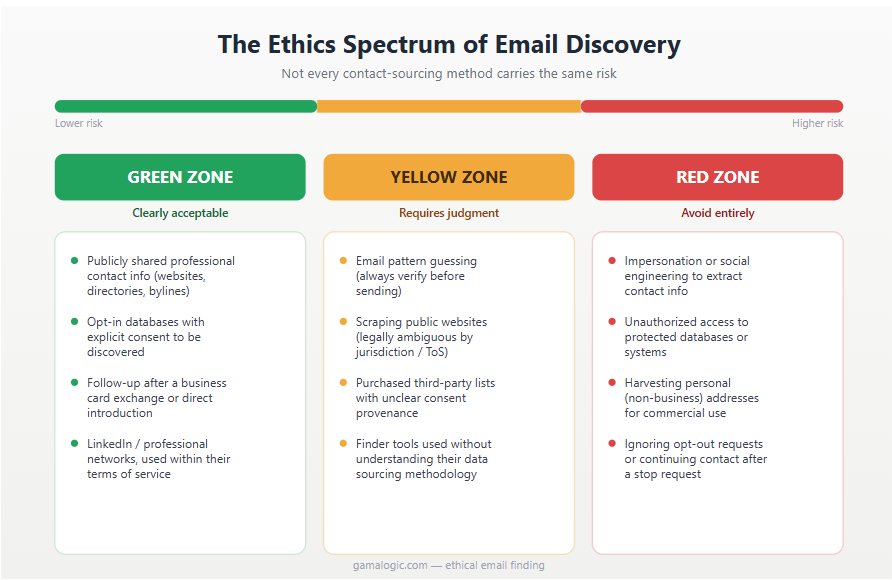
“Where common contact-sourcing methods fall on the ethics spectrum.“
A useful way to pressure-test any contact-sourcing method before you rely on it is to run it through four checks:
A contact-sourcing method that fails any one of these four checks is worth reconsidering, regardless of how efficient it is.
Professional relationships increasingly begin with a single, well-targeted message rather than a mass campaign. Finding professional contact information ethically means that first conversation starts on a foundation of trust rather than one more unsolicited email in an already-crowded inbox. This isn’t just a compliance nicety it’s also a data quality problem.
Public research on registration-form data suggests roughly 22% of email addresses submitted through online forms are invalid or non-existent, a reminder that sourcing legitimacy and technical accuracy are two separate failure points, not one.
Email finding doesn’t happen in a legal vacuum. Several frameworks shape what’s permissible:
GDPR (European Union). Requires a lawful basis for processing personal data, purpose limitation (using data only for its stated purpose), data minimization, and explicit consent in many scenarios.
CAN-SPAM Act (United States). Requires honest subject lines and headers, clear identification of commercial messages, a working unsubscribe mechanism, and prompt honoring of opt-out requests.
CCPA/CPRA (California). Gives individuals the right to know what’s collected, the right to deletion, the right to opt out of data sales, and protection from discrimination for exercising those rights.
Industry-specific overlays add further restriction in healthcare (HIPAA), financial services (GLBA), and legal practice (privilege considerations) — worth a specific compliance review if you operate in those verticals.
Verification has two layers, and skipping either one is where most “ethical” outreach programs quietly fail:
Combining ethical sourcing with technical email verification is what actually moves the needle on deliverability and reputation sourcing legitimacy alone doesn’t stop a bounce, and verification alone doesn’t establish you had the right to reach out. For a deeper look at how validation protects your sending domain over time, see Email Sender Reputation and Validation Strategies.
1. Use legitimate sources first. Company websites, professional directories, industry associations, and conference speaker profiles are built to facilitate professional contact — start there before anything more aggressive.
2. Use ethical email finder tools. A tool like Gamalogic’s email finder for professional contact discovery locates professional email addresses from a name and company domain using public business information, rather than scraping private or unconsented sources. Combine this with Gamalogic’s real-time email validation and verification service so every discovered address is confirmed deliverable before it enters a sequence.
3. Verify before outreach. Every discovered or guessed address gets a verification pass this alone eliminates a meaningful share of the bounce risk described above.
4. Focus on relevance. Contact people whose role genuinely aligns with your outreach purpose, not everyone at a target company this is the same principle behind Gamalogic’s guide to ethical, targeted lead generation.
5. Document your source. Note where each contact came from and when, directly in your CRM this is your audit trail if a compliance question ever comes up.
6. Respect preferences immediately. Opt-outs and unsubscribes get honored the moment they arrive, with no exceptions.
Finding the address ethically is half the equation how you use it is the other half.
Be transparent about your source. Acknowledging how you found someone’s information isn’t a liability, it’s a trust signal:
“I noticed your comments during the recent panel on [topic] and wanted to connect…” “After reading your piece on [topic], I thought you might be interested in…” “Our mutual connection, [Name], suggested you’d be the right person to discuss…”
Lead with relevance, not a pitch. Reference the recipient’s actual role, recent work, or organizational context — generic messages dressed up as personalized ones are easy to spot and erode trust fast.
Make opting out effortless. A single clear unsubscribe or “not interested” path, honored instantly, is non-negotiable.
Use progressive disclosure. Start with a low-commitment, value-oriented message; let the relationship’s pace be set by the recipient’s response, not by your sequence’s next step. If your first message is a cold email, What Is a Cold Email and Why Is Everyone Talking About It? covers how to make that first message land well.
Organizations known for respectful outreach see three compounding effects: stronger brand perception relative to competitors using aggressive tactics, higher referral rates as recipients recommend the approach to peers, and — because messages are targeted and relevant rather than mass-blasted — measurably better open and response rates. None of this requires taking it on faith: it follows directly from the fact that relevant, well-sourced outreach reaches inboxes (rather than spam folders) and gets read by people who have a real reason to engage. This is especially visible in account-based marketing, where a small number of precisely-sourced contacts at target accounts consistently outperforms a large, loosely-sourced list.
| Method | Sourcing legitimacy | Technical accuracy | Effort | Best for |
|---|---|---|---|---|
| Manual research (websites, directories, LinkedIn) | High — fully traceable | Requires separate verification | High | Small, high-value target lists |
| Pattern guessing | Medium — legal but low-context | Requires mandatory verification | Low | Filling gaps when other sources fail |
| Purchased third-party lists | Variable — depends entirely on the vendor’s own sourcing | Often unverified at point of sale | Low | Not recommended without vendor due diligence |
| Ethical email finder + validator (e.g., Gamalogic) | High — sourced from public/opt-in data by design | Built-in real-time verification | Low | Scaled outbound where both source and accuracy matter |
Gamalogic’s email finder for ethically-sourced professional contacts is built around the same purpose provenance precision permission logic outlined above:
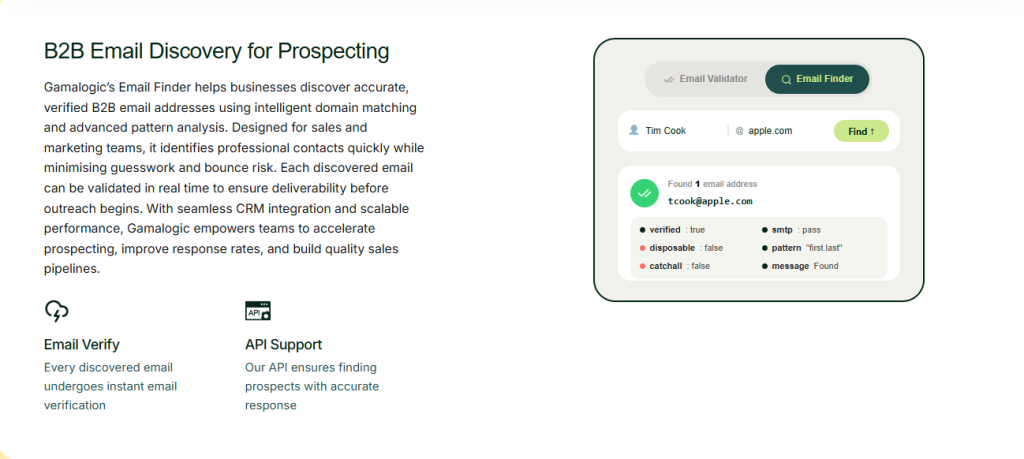
“A sample result from Gamalogic’s Email Finder, sourced and verified in one step.”
What are ethical ways to find professional contact information?
Publicly available business sources (company websites, directories, conference profiles), opt-in professional databases, warm introductions, and verified email-finder tools that source from public or consensual data combined with a technical verification step before outreach.
How do you verify professional contact information ethically?
Two checks, not one: confirm the source was legitimate (public, opt-in, or properly licensed) and document it, then run a technical verification pass (syntax, domain/MX, SMTP mailbox check) before the address ever enters an active sequence.
What are the best practices for finding professional contact details ethically?
Start with legitimate public sources, use email-finder tools that disclose their data sourcing, verify every address before sending, document the source in your CRM, stay focused on role-relevant contacts, and honor opt-outs immediately.
What’s the ethics of using email for contact and profile search?
It comes down to purpose and proportionality: a legitimate business reason, sourced from public or consensual data, used to inform relevant outreach not to profile someone beyond what the outreach actually requires.
How do you verify professional contact ethically at scale?
Manual verification doesn’t scale past a small list; at volume, pair an ethical sourcing method with an automated verification API so every address is checked consistently rather than spot-checked.
How should you contact someone ethically once you have their email?
Be transparent about how you found them, make the message specifically relevant to their role or recent work, keep the ask proportional to the relationship stage, and make opting out immediate and effortless.
Looking to build a prospect list the ethical way? Try Gamalogic’s ethically-sourced email finder sourced from public and opt-in data, verified in real time.
Make the move now to adopt Gamalogic’s ethical email finding technology!


Backlinks are more than just links—they’re powerful signals that tell search engines your content is credible and worth ranking. As a key factor in SEO, they can elevate your site’s visibility or hold it back. This guide explores why backlinks still matter and how to leverage them effectively in today’s search landscape.

This blog breaks down modern email finding—showing you how to efficiently connect with the right contacts online using ethical, accurate, and time-saving methods. Learn the tools, techniques, and best practices to grow your network without compromising trust.
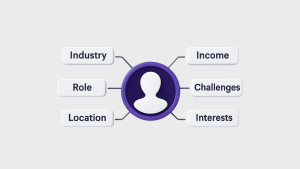
Struggling to get responses from your cold emails? Learn 12 proven strategies to craft compelling messages that not only get opened but also drive real engagement and replies from your target audience.


 No credit card required
Post your Comment.