 Sign In














 Email Marketing
 ABM
ABM  List Building
  Lead Generation
  Growth Hacker
  Digital Marketing
  Data Enrichment
  Software as a Service
  Data as a Service
  Waterfall Enrichment
  Startup
  Revenue Performance
  Job Change Tracking
  Customer Data Platform
  CRM
CRM 


 Knowledge Base
  Video Tutorials
  Help Center
  Tarpitting Scoring
  ROI Calculator
  About us
  Contact us
  Testimonials
  Automation
Do Incentivized Meetings Work in 2026? How Gift Cards Boost Cold Email Replies

15 Apr 2026
Mohamed Ahmed
12 Minutes
Read

 Blog
FAQ
Case Studies
Knowledge Base
Video Tutorials
Help Center
SEG Validation
Tarpitting Scoring
ROI Calculator
About us
Contact us
Testimonials
Blog
FAQ
Case Studies
Knowledge Base
Video Tutorials
Help Center
SEG Validation
Tarpitting Scoring
ROI Calculator
About us
Contact us
Testimonials
Cold email has become harder than ever. Prospects are overwhelmed, inboxes are saturated, and attention spans are shrinking. Even well-crafted outreach often struggles to get replies, let alone booked meetings.
Because of this, some outbound teams are experimenting with a controversial but increasingly popular tactic: incentivized meetings.
The idea is simple. Instead of relying purely on interest or curiosity, you offer a tangible reward, often a gift card, to encourage prospects to take a meeting. In some cases, teams even test escalating incentives across a sequence, starting at $50 or $100 and increasing up to $250 for later touches.
But does it actually work? And more importantly, is it sustainable? Let’s break it down.
Incentivized meetings are exactly what they sound like: you offer a reward in exchange for a booked call.
The most common form is a gift card incentive (Amazon, Visa, or similar). The structure usually looks like this:
Some teams also extend this concept to incentivized email replies, where prospects are rewarded simply for responding, even if they don’t book immediately.
The goal is to reduce friction. Instead of asking for attention or time based purely on value proposition, you add an immediate, tangible benefit.
The effectiveness of incentivized meetings comes down to basic behavioral psychology.
Most cold emails rely on future-oriented benefits:
But prospects are busy. Future value is abstract.
A gift card, on the other hand, is immediate and concrete.
When someone is offered something valuable upfront, there is a natural psychological pull to respond. Even if they are skeptical, they feel a mild obligation to acknowledge the offer.
This is especially powerful in cold outreach, where no prior relationship exists.
In a crowded inbox, almost every email looks the same:
An incentive stands out instantly. It breaks pattern recognition and increases open-to-reply conversion rates.
There are outbound teams reporting strong results from incentivized meetings, especially in:
In these cases, the incentive acts as a “filter breaker.” It gets prospects to pause and engage when they normally wouldn’t.
Some teams even report that a majority of booked meetings come from incentive-based outreach, particularly when targeting cold or lukewarm lists.
However, there’s an important nuance: volume does not automatically equal quality.
While incentivized meetings can increase reply rates, they come with real downsides.
Some prospects are only showing up for the reward, not because they are genuinely interested in the solution. This can lead to:
When incentives are introduced too early, you may attract people optimizing for reward rather than relevance. This can skew your funnel metrics and make it harder to understand true product-market fit signals.
If your outreach becomes known primarily for incentives, you risk:
This is especially risky for high-ticket SaaS or consultative sales motions.
Some companies have internal policies that restrict accepting gifts or incentives. In regulated industries, this can create friction or even disqualify leads entirely.
A newer variation is paying for email replies instead of meetings.
The logic is:
However, this approach is still experimental. While it may increase engagement rates, it does not guarantee meaningful intent. Many replies may be minimal or purely transactional.
Regardless of whether incentives are used, one factor consistently determines success in cold email: data quality.
This is where tools like Gamalogic become critical in modern outbound workflows.
Before any incentive, messaging, or sequence can work, your emails need to actually reach valid inboxes.
With Gamalogic, teams can:
This matters even more when using incentivized outreach, because poor list quality amplifies every downside:
In other words, incentives may increase replies—but clean data ensures you actually reach real people in the first place.
This strategy tends to work best when:
If your list is already well-qualified, incentives act as a conversion booster—not a crutch.
If your offer is already compelling, the incentive becomes a “nudge,” not the reason for the meeting.
When prospects are constantly pitched similar solutions, incentives can help you break through noise.
Top-performing teams rarely use incentives on every email. Instead, they:
If you choose to test this approach, structure matters more than the incentive itself.
A strong framework looks like this:
The mistake most teams make is leading with the gift card. That immediately shifts perception from “solution-based outreach” to “transactional request.”
Yes, but with caveats.
They can significantly increase reply and meeting rates when used correctly, especially in cold outbound environments where attention is scarce.
However, they are not a replacement for:
Instead, they function best as a conversion multiplier, not a standalone strategy.
Incentivized meetings are not inherently good or bad, they are a lever.
Used poorly, they attract low-intent leads and distort your pipeline. Used strategically, they can improve cold email performance in crowded markets.
The teams seeing the best results are not those offering the highest gift cards. They are the ones combining:
In 2026, cold outreach is no longer about who sends the most emails—or even who offers the biggest incentive. It’s about who builds the most compelling reason to respond.


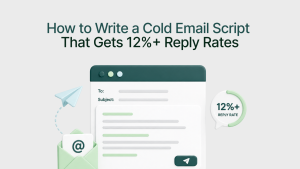
Many businesses blame poor results on changing trends, but the real issue is execution. Generic templates, scraped lead lists, and surface level personalization have flooded inboxes with noise. The result is predictable: low open rates, even lower replies, and the mistaken belief that cold email no longer works.
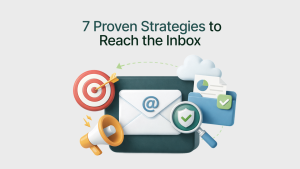
A concise guide to improving cold email deliverability, covering key factors like authentication, domain setup, list quality, and sending practices. Learn proven strategies to avoid spam filters, boost inbox placement, and maximize outreach results.
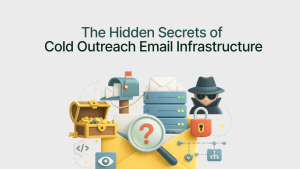
Learn how to build a reliable cold outreach email infrastructure with proper domain setup, SPF, DKIM, DMARC configuration, inbox warm-up, and email verification using tools like Gamalogic to improve deliverability.


 No credit card required
Post your Comment.