 Sign In











 Email Marketing
 ABM
ABM  List Building
  Lead Generation
  Growth Hacker
  Digital Marketing
  Data Enrichment
  Software as a Service
  Data as a Service
  Waterfall Enrichment
  Startup
  Revenue Performance
  Job Change Tracking
  Customer Data Platform
  CRM
CRM 


 Knowledge Base
  Video Tutorials
  Help Center
  Tarpitting Scoring
  ROI Calculator
  About us
  Contact us
  Testimonials
  Automation
Privacy & Compliance in Email Validation: How to Handle PII Safely

19 Mar 2026
Sreerag
12 Minutes
Read

 Blog
FAQ
Case Studies
Knowledge Base
Video Tutorials
Help Center
SEG Validation
Tarpitting Scoring
ROI Calculator
About us
Contact us
Testimonials
Blog
FAQ
Case Studies
Knowledge Base
Video Tutorials
Help Center
SEG Validation
Tarpitting Scoring
ROI Calculator
About us
Contact us
Testimonials
Email validation is essential for improving deliverability, preventing fraud, and maintaining a clean database. But there’s a critical question many businesses overlook:
Is email validation compliant with privacy laws like GDPR?
The answer lies in how you handle Personally Identifiable Information (PII) during the verification process.
Since email addresses are considered personal data under regulations like the General Data Protection Regulation, every validation step must follow strict data protection and privacy-first principles.
If not handled correctly, email verification can expose your business to:
In this guide, we’ll break down how to implement GDPR-compliant email validation while maintaining performance, security, and compliance.
Yes, under the General Data Protection Regulation, an email address is classified as Personally Identifiable Information (PII).
An email address can:
This means every email validation process must follow data protection principles.
This is especially important in onboarding flows where email verification connects directly with identity and fraud detection systems, often used in secure environments like KYC workflows.
To ensure email verification GDPR compliance, your system must follow core GDPR principles:
Only collect what is necessary. Avoid storing extra metadata during validation.
Use email addresses only for validation, communication, and onboarding. Not for unauthorized processing.
You must have clear user consent or a legitimate interest. This is critical in consent-based email validation workflows.
Do not store email data longer than necessary.
Protect data using encryption, access control, and secure APIs.
Without a privacy-first email validation strategy, you risk:
Other global regulations like the California Consumer Privacy Act and India’s Personal Data Protection Bill also enforce strict rules on handling personal data.
This makes data protection email verification a global requirement not just a GDPR concern.
A typical secure email validation API performs checks like:
But the key compliance question is: what happens to the data during and after these checks?
To ensure PII-safe email validation, follow these principles:
A privacy-compliant email verification process should include:
Protect data in transit using HTTPS.
Convert emails into hashed values for secure processing.
Replace sensitive data with tokens.
Limit who can access validation data.
Ensure mailbox checks do not expose sensitive data.
To implement secure and compliant email validation, follow this structure:
Use real-time email validation API to prevent bad data entry.
Ensure compliance with GDPR and email marketing laws.
Avoid storing unnecessary validation logs.
Choose tools with encryption and zero data retention policies.
Review workflows for compliance gaps.
These practices also support better email deliverability and sender reputation, since clean and compliant data improves trust signals across email systems.
Not all tools are built with compliance in mind.
When selecting a secure email verification API, ensure it offers:
Using a privacy-focused solution like Gamalogic helps ensure both security and compliance without sacrificing performance.
This becomes even more critical in systems where email validation connects with fraud detection and KYC workflows, ensuring both identity trust and data protection.
Email validation is not just about cleaning lists it’s about building a trusted communication system.
When done right, it:
This aligns with how email validation reduces bounce rates and improves sender trust, making it a key pillar across both marketing and security systems.
In 2026 and beyond, privacy-first systems will define successful digital platforms.
Email validation must evolve from a technical tool to a compliance-driven process.
If you ignore PII handling, you risk penalties.
If you implement it correctly, you build trust, security, and long-term growth.
Start with:
Build a system that is not just efficient, but secure, compliant, and future-ready.


Learn how email validation customer retention strategies improve ecommerce engagement, lifecycle email optimization, deliverability, repeat purchases, and Customer Lifetime Value (CLV) using clean email lists.
Poor email data quality can quietly undermine even the most sophisticated outreach strategy. Invalid addresses, abandoned accounts, disposable emails, and risky contacts all contribute to lower deliverability, weaker sender reputation, and fewer responses.
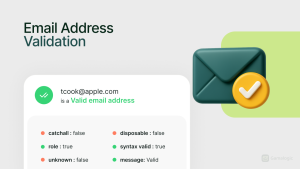
Discover What is Email Validation , why it matters, and how third-party tools help improve deliverability, sender reputation, and ROI.


 No credit card required
Post your Comment.