 Sign In












 Email Marketing
 ABM
ABM  List Building
  Lead Generation
  Growth Hacker
  Digital Marketing
  Data Enrichment
  Software as a Service
  Data as a Service
  Waterfall Enrichment
  Startup
  Revenue Performance
  Job Change Tracking
  Customer Data Platform
  CRM
CRM 


 Knowledge Base
  Video Tutorials
  Help Center
  Tarpitting Scoring
  ROI Calculator
  About us
  Contact us
  Testimonials
  Automation
How Often Should You Clean Your Email List? A Practical Hygiene Schedule

04 Jul 2026
Sreerag
12 Minutes
Read

 Blog
FAQ
Case Studies
Knowledge Base
Video Tutorials
Help Center
SEG Validation
Tarpitting Scoring
ROI Calculator
About us
Contact us
Testimonials
Blog
FAQ
Case Studies
Knowledge Base
Video Tutorials
Help Center
SEG Validation
Tarpitting Scoring
ROI Calculator
About us
Contact us
Testimonials
Clean your email list quarterly at minimum, monitor bounce and complaint rates monthly, and verify new contacts in real time at signup. High-volume senders and fast-growing B2B lists should clean monthly. Small, stable B2C lists can often stretch to biannually. Always clean before a major campaign, regardless of where you are in the schedule.
The rest of this guide breaks that down by list size and type, and covers the trigger events that should override the calendar entirely.
Most guides answer this question with one word: quarterly. That’s a reasonable default, but it ignores list composition.
A 5,000-contact B2C newsletter and a 200,000-contact B2B sales list decay at very different rates. Cleaning both on the same calendar wastes either time or data quality.
Email list decay is the gradual loss of deliverable addresses over time. Industry estimates put this at roughly 22–25% per year.
People change jobs. They abandon inboxes. They switch providers or let old accounts go dormant. A list verified six months ago has likely already lost 10–12% of its accuracy without anyone touching it.
Two factors make decay worse than the baseline rate:
B2B lists decay faster. Corporate addresses get deactivated within days of someone leaving a company. High-turnover industries agencies, recruiting, tech startups see this compound quickly.
B2C lists decay slower but dirtier. Personal Gmail or Yahoo addresses last for years. But B2C lists pick up more disposable signups, more mobile typos, and more silently abandoned accounts.
A single blanket schedule can’t account for both patterns at once. Your list’s composition matters more than a generic calendar rule.
| List Type | Size | Cleaning Frequency | Monitoring Frequency |
|---|---|---|---|
| B2B (sales/CRM) | High-turnover industry | Monthly | Weekly |
| B2B (sales/CRM) | Stable industry | Quarterly | Monthly |
| B2C (newsletter/ecommerce) | 100,000+ contacts | Monthly | Weekly |
| B2C (newsletter/ecommerce) | 10,000–100,000 | Quarterly | Monthly |
| B2C (newsletter/ecommerce) | Under 10,000 | Biannually | Monthly |
| Any list | — | Immediately before any major campaign | — |
Monitoring and cleaning aren’t the same thing. Monitoring means checking bounce rate, spam complaint rate, and unsubscribe trends after every send, at minimum monthly. Cleaning is the action step removing bad addresses, suppressing repeat bounces, segmenting inactive contacts.
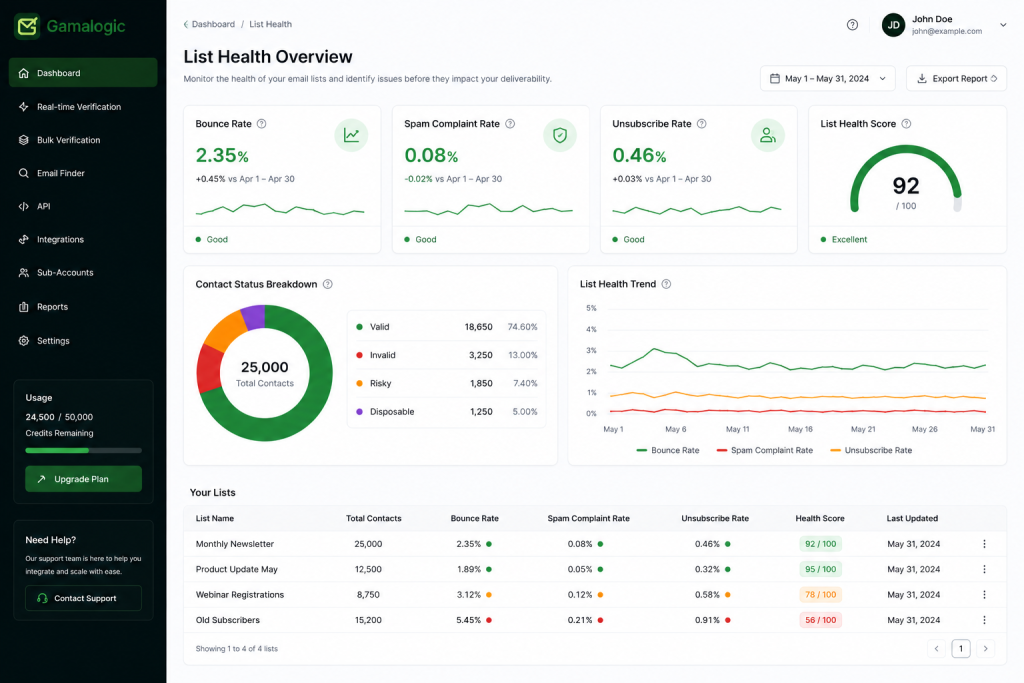
(A dashboard view of gamalogic email validation tool showing list health at a glance bounce rate, spam complaint rate, and valid/invalid/risky breakdown for a sample list.)
Monitor often. Clean on the schedule above, or the moment a trigger event fires.
Clean immediately, regardless of your normal cycle, when you see:
A full list clean isn’t just deleting hard bounces after the fact.
support@ if you want inbound repliesEmail Verification is typically priced per address, often a fraction of a cent to a few cents depending on volume. Cleaning a 50,000-contact list costs a small fraction of what a single blacklisting incident or ESP account suspension costs in lost sends and recovery time.
The math almost always favors cleaning on schedule over reacting after the damage is done.
The schedule above only works if verification plugs into wherever your contacts already live. Most teams don’t want a manual export/upload cycle every quarter.
This is where Gamalogic email validatior fits directly into the workflow:
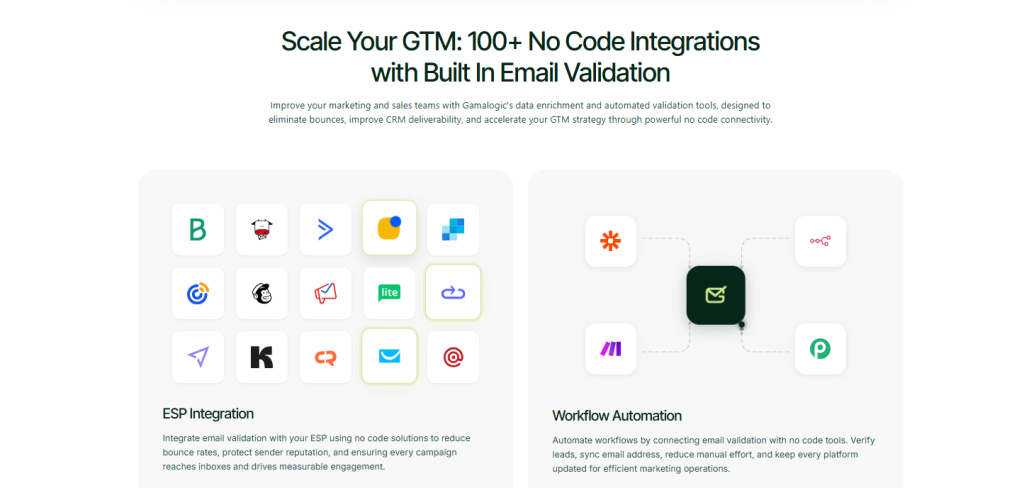
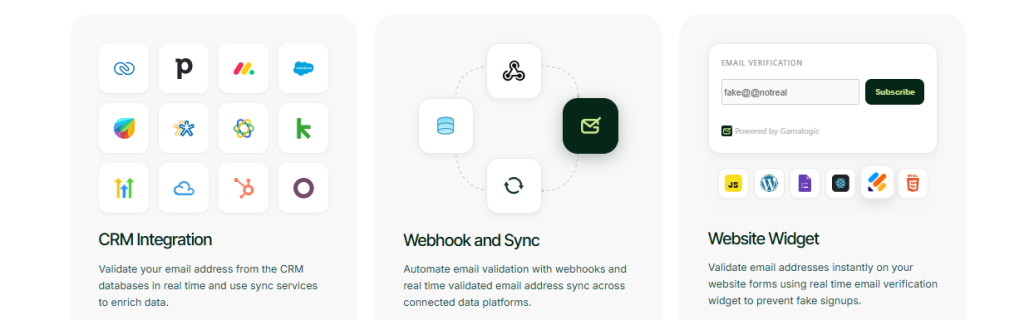
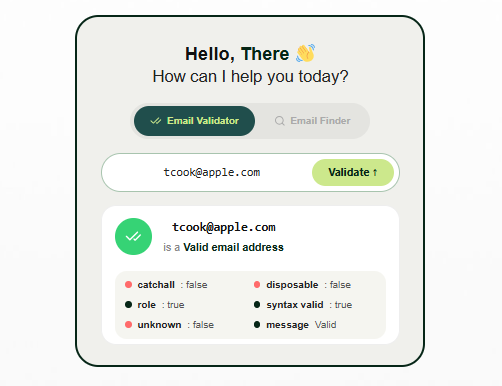
For teams that don’t want to track a manual calendar at all, connecting Gamalogic email validation api to your ESP effectively automates both halves of this schedule: new contacts get verified at signup, and existing lists get re-checked in bulk on whatever cadence your list size and type call for.
How often should you clean your email list?
Quarterly at minimum for most organizations, monthly for high-volume or fast-growing B2B lists, and biannually for small, stable B2C lists with bounce and complaint rates monitored monthly in between.
What’s the difference between monitoring and cleaning an email list?
Monitoring is checking bounce rate, complaint rate, and engagement metrics regularly. Cleaning is the action of removing bad addresses and inactive contacts, done on a schedule or when monitoring reveals a problem.
Do B2B and B2C email lists need different cleaning schedules?
Yes. B2B lists decay faster because corporate addresses are deactivated quickly when employees leave. B2C lists decay slower but accumulate more disposable and inactive addresses over time.
What triggers should prompt a clean outside the normal schedule?
A bounce rate above 2%, a spam complaint rate above 0.3%, slowing delivery times, a large bulk import, or a platform/CRM migration should all trigger an immediate clean.
Is it better to delete inactive subscribers or try to re-engage them first?
Re-engagement first is usually better. It gives inactive contacts one more chance to confirm interest, and you can clean based on who doesn’t respond rather than removing cold contacts outright.
Related reading: The Complete Guide to Email Verification & Email Quality ·


Improve transactional email validation for e-commerce with better OTP email delivery, receipt email deliverability, and order confirmation email optimization. Learn how email validation improves transactional email deliverability and customer communication workflows.
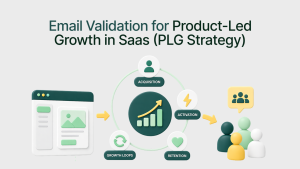
Learn how email validation supports product-led growth in SaaS by improving data quality, user engagement, and onboarding efficiency.
Tired of cold emails going nowhere? Don’t let invalid addresses ruin your outreach efforts. Discover how catch-all email validation can protect your brand’s reputation, reduce bounce rates, and boost deliverability. Learn how to identify risky email domains, filter spam, and optimize your email campaigns with smarter validation—before you hit send. Real lessons, real impact—see how digital marketers are winning with catch-all email verification.


 No credit card required
Post your Comment.