 Sign In













 Email Marketing
 ABM
ABM  List Building
  Lead Generation
  Growth Hacker
  Digital Marketing
  Data Enrichment
  Software as a Service
  Data as a Service
  Waterfall Enrichment
  Startup
  Revenue Performance
  Job Change Tracking
  Customer Data Platform
  CRM
CRM 


 Knowledge Base
  Video Tutorials
  Help Center
  Tarpitting Scoring
  ROI Calculator
  About us
  Contact us
  Testimonials
  Automation
Google’s New Cold Email Rules: What Changed and How to Stay Out of Spam

31 Jul 2026
Mohamed Ahmed
12 Minutes
Read

 Blog
FAQ
Case Studies
Knowledge Base
Video Tutorials
Help Center
SEG Validation
Tarpitting Scoring
ROI Calculator
About us
Contact us
Testimonials
Blog
FAQ
Case Studies
Knowledge Base
Video Tutorials
Help Center
SEG Validation
Tarpitting Scoring
ROI Calculator
About us
Contact us
Testimonials
If you’ve noticed your cold email campaigns getting fewer opens and replies than they used to, you’re not alone. Many businesses are experiencing lower inbox placement—not because their email copy has worsened, but because Google has changed how it evaluates email senders.
For years, marketers focused on writing compelling subject lines and persuasive email copy. While those elements still matter, they’re no longer enough. Today, Google looks beyond the content of your email and pays much closer attention to who is sending it, how trustworthy the sender is, and whether recipients actually want to receive those emails.
In other words, cold email success is no longer just about writing better emails—it’s about building a trusted sending infrastructure.
If your domain has a poor sender reputation, your email list contains outdated contacts, or your authentication records aren’t properly configured, even the best-written email can end up in the spam folder.
The good news is that Google’s updated approach isn’t designed to stop legitimate businesses from sending cold emails. Instead, it’s intended to reduce spam and reward senders who follow responsible email practices.
In this guide, we’ll explain what has changed, why it matters, and the practical steps you can take to stay out of the spam folder. You’ll also learn how Gamalogic helps businesses build healthier email lists that improve deliverability and protect sender reputation.
Google hasn’t banned cold email. Instead, it has become much better at identifying the difference between responsible outreach and spam-like behavior.
Rather than focusing primarily on email content, Gmail now evaluates multiple trust signals before deciding whether your email deserves a place in the inbox.
Some of the most important signals include:
This means your infrastructure and sending behavior now carry as much weight as your subject line and message.
Every day, Gmail processes billions of emails. A significant portion of those messages are unsolicited, malicious, or irrelevant.
To improve user experience, Google has strengthened its spam detection systems to identify senders who demonstrate poor email practices.
Its goal isn’t to punish businesses that use cold email responsibly. Instead, it wants to reward senders who:
Businesses that follow these best practices are more likely to achieve consistent inbox placement.
Understanding what hurts your deliverability is the first step toward improving it.
One of the fastest ways to damage your sender reputation is by emailing invalid or outdated contacts.
Hard bounces signal to Google that your email list isn’t well maintained. Over time, repeated bounces reduce trust in your domain, making future campaigns less likely to reach the inbox.
Before launching any campaign, verify your contacts using Gamalogic. Removing invalid, disposable, duplicate, and risky email addresses helps reduce bounce rates and protect your sender reputation.
Related Reading: The Complete Guide to Email Verification & Email Quality in 2026
Email authentication is no longer optional.
Without properly configured SPF, DKIM, and DMARC records, mailbox providers have fewer ways to verify that your emails are legitimate.
Authentication helps prove your identity and reduces the risk of spoofing and phishing attacks.
Businesses that neglect authentication often experience lower deliverability—even if their email content is excellent.
Many businesses purchase a new domain and immediately send thousands of cold emails.
From Google’s perspective, that’s a warning sign.
Responsible senders build trust gradually by increasing email volume over time. This process, often called domain warm-up, helps establish a positive sending history before scaling outreach campaigns.
Slow, consistent growth is far more effective than sudden spikes in sending volume.
Google doesn’t just analyze technical signals—it also considers how recipients interact with your emails.
If people consistently ignore your emails, delete them without reading, or mark them as spam, those negative engagement signals weaken your sender reputation.
Personalized, relevant emails are far more likely to generate opens and replies, improving your long-term deliverability.
If you’re looking for ideas to improve personalization, check out 12 Essential Strategies for Cold Emails That Get Opened, Read, and Replied To.
Email data naturally degrades over time.
Employees leave companies, businesses close, and email addresses become inactive. Continuing to send emails to outdated contacts leads to unnecessary bounces and declining sender reputation.
Make list hygiene a regular part of your outreach strategy by:
A clean email database improves deliverability, campaign performance, and reporting accuracy.
For more practical advice, read The 7-Step Email List Hygiene Process Used by Top Cold Email Teams.
One of the biggest changes in Google’s approach is its increased reliance on sender reputation.
Think of it as your email credibility score.
Every campaign contributes to that score through factors like:
The stronger your sender reputation, the greater your chances of reaching the inbox—even in highly competitive email environments.
Adapting to Google’s new cold email rules doesn’t require complicated tools or expensive software. It starts with following consistent email best practices that build trust over time.
Here are six practical ways to improve your deliverability and keep your emails where they belong—the inbox.
Your email list is one of the biggest factors influencing your sender reputation.
Sending emails to invalid or risky addresses increases hard bounces, which tells Gmail that your list isn’t well maintained. Over time, this can reduce your inbox placement across all campaigns.
Before every outreach campaign, verify your email list using Gamalogic to identify:
A verified email list not only improves deliverability but also helps you save time and resources by focusing on real prospects.
Sender reputation isn’t built overnight. Gmail evaluates your sending history over time, rewarding consistent and responsible behavior.
If you’re using a new domain, avoid sending thousands of emails immediately. Instead:
This gradual approach helps establish trust and reduces the likelihood of triggering spam filters.
More emails don’t always mean more opportunities.
Sending large volumes of irrelevant emails often leads to low engagement, higher unsubscribe rates, and spam complaints—all of which negatively impact your sender reputation.
Instead, prioritize:
When recipients find your emails useful, they’re more likely to open, reply, and engage. These positive signals tell Gmail that your emails deserve a place in the inbox.
Not every prospect has the same needs or interests.
Sending identical emails to everyone on your list often results in lower engagement because the message isn’t relevant to every recipient.
Segment your audience based on factors such as:
Targeted campaigns consistently outperform generic mass emails and contribute to a healthier sender reputation.
If you’re looking for practical segmentation strategies, explore Email Segmentation Best Practices: How Clean Data Boosts Opens, Clicks & Revenue.
You can’t improve what you don’t measure.
Track key email performance indicators after every campaign, including:
Sudden changes in these metrics often indicate issues with your email list, authentication, or sending practices.
Addressing problems early helps prevent long-term damage to your sender reputation.
Strong email infrastructure is now just as important as compelling copy.
Make sure your sending domain has:
These technical foundations help mailbox providers recognize your emails as legitimate and improve your chances of landing in the inbox.
As Google’s spam filtering evolves, several misconceptions continue to circulate. Let’s separate fact from fiction.
False.
Google hasn’t banned cold email. It has become more effective at identifying spam-like behavior. Businesses that follow responsible sending practices can still run successful cold email campaigns.
Not anymore.
A compelling subject line can improve open rates, but it can’t help if your email never reaches the inbox. Today, sender reputation, authentication, and engagement play a much larger role in deliverability.
Many businesses treat email verification as something they do once before importing a list.
In reality, email data changes constantly. Employees leave companies, domains expire, and inboxes become inactive. Regular verification helps maintain list quality and protects your sender reputation over time.
Google’s new standards reward businesses that maintain clean, high-quality email data.
Gamalogic helps you meet those expectations by ensuring every campaign starts with verified email addresses.
With Gamalogic, you can:
Whether you’re running cold outreach, lead generation campaigns, or email marketing, Gamalogic helps you build a healthier sending environment that supports better inbox placement.
The conversation around cold email has changed dramatically. Success today isn’t about finding clever subject lines or sending more emails than your competitors. It’s about proving to mailbox providers that you’re a trustworthy sender.
Google’s updated approach rewards businesses that prioritize clean email lists, proper authentication, relevant messaging, and consistent sending behavior. Companies that continue relying on outdated practices—such as purchased email lists, mass blasting, or neglecting list hygiene—will find it increasingly difficult to reach the inbox.
The good news is that these changes create an opportunity. By investing in email verification, maintaining a strong sender reputation, and following modern deliverability best practices, you can build sustainable cold email campaigns that generate meaningful conversations instead of landing in the spam folder.
If you’re ready to improve your cold email performance, start with the quality of your data. Gamalogic helps you verify email addresses, reduce bounce rates, and maintain healthier email lists—giving every campaign the best chance of reaching the right inbox.


Cold email in 2026 is no longer about sending more—it’s about sending better. A focused cadence of 50 highly targeted emails per day can outperform large-scale blasts when paired with personalization, clear messaging, and strong deliverability.
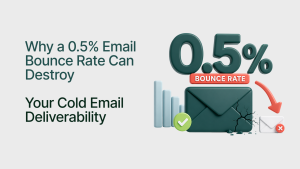
Learn why even a 0.5% email bounce rate can negatively impact cold email deliverability, damage sender reputation, and reduce inbox placement. Discover the hidden risks of stale email data and how proper email verification helps protect your outreach campaigns.
Even the most compelling email won't drive results if it never reaches the inbox—learn eight proven strategies to improve email deliverability, protect your sender reputation, and maximize campaign performance with Gamalogic.


 No credit card required
Post your Comment.