 Sign In












 Email Marketing
 ABM
ABM  List Building
  Lead Generation
  Growth Hacker
  Digital Marketing
  Data Enrichment
  Software as a Service
  Data as a Service
  Waterfall Enrichment
  Startup
  Revenue Performance
  Job Change Tracking
  Customer Data Platform
  CRM
CRM 


 Knowledge Base
  Video Tutorials
  Help Center
  Tarpitting Scoring
  ROI Calculator
  About us
  Contact us
  Testimonials
  Automation
Why is Email Validation so important for Email Marketing Experts?

06 Sep 2022
Mohamed Ahmed
10 Minutes
Read

 Blog
FAQ
Case Studies
Knowledge Base
Video Tutorials
Help Center
SEG Validation
Tarpitting Scoring
ROI Calculator
About us
Contact us
Testimonials
Blog
FAQ
Case Studies
Knowledge Base
Video Tutorials
Help Center
SEG Validation
Tarpitting Scoring
ROI Calculator
About us
Contact us
Testimonials
Email validation is the process of checking every address on a list for deliverability, structural accuracy, and risk, before it ever gets a real send. For email marketers, it’s not a one-time cleanup task. It’s the layer that decides whether every other part of the strategy (copy, segmentation, automation, budget) actually reaches a human being.
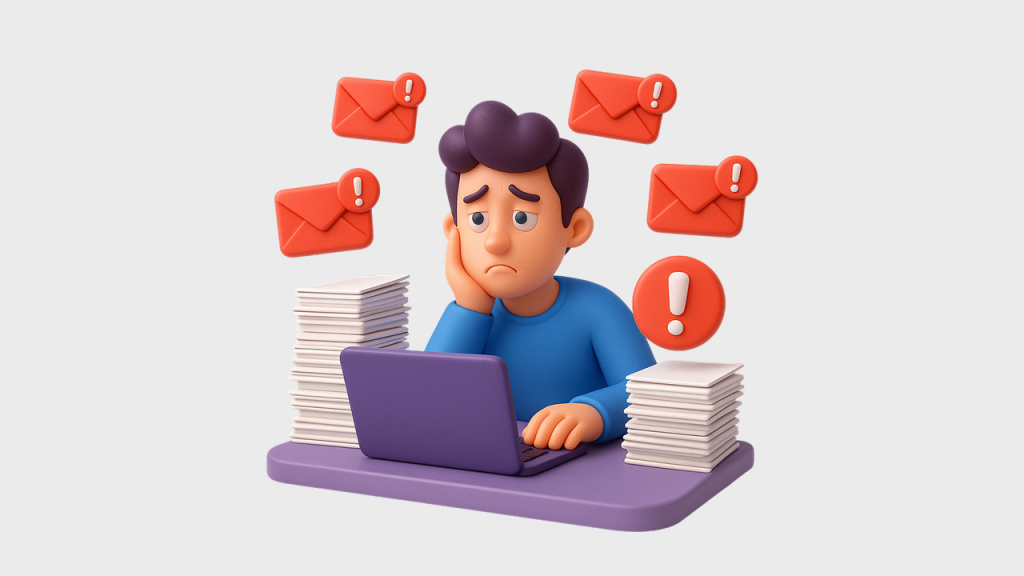
Most explanations of “why validation matters” stop at bounce rate. That’s one consequence, not the whole picture. Below are 10 distinct reasons email validation sits underneath everything else an email marketer does in 2026, from list economics to compliance to how AI-driven inbox filters now score senders.
This is the reason most people already know, so we’ll keep it short here rather than repeat it we’ve written a full mechanics-level breakdown of exactly how invalid addresses translate into hard bounces, spam-trap hits, and reputation scoring in How Email Validation Reduces Bounce Rate and Protects Sender Reputation. If bounce rate and reputation scoring are what you came here for, that’s the deeper read. What follows here is everything validation affects beyond that.
Every ESP and most list-building/enrichment tools charge per contact, per send, or per credit. An unvalidated list routinely carries a meaningful share of dead, mistyped, or abandoned addresses meaning a chunk of every campaign budget is spent sending mail that was never going to land. Validation isn’t a cost center; it’s the step that stops you from paying twice: once to acquire a bad address, and again to keep emailing it. If you’re not sure where your own list stands, running through the checklist we use with marketers auditing a list for the first time is a fast way to find out before your next send.
If 15–30% of a list is invalid or unengaged, every engagement metric calculated against “total sent” is artificially depressed and every metric calculated against “delivered” is quietly inflated by a shrinking, uncertain denominator. Marketers who validate first are comparing campaigns against a stable baseline. Marketers who don’t are often optimizing against noise: a subject-line “win” might just be a smaller, cleaner send, not better copy.
Personalization and lifecycle segmentation assume the data feeding them is real. A segment built on stale, duplicated, or fake sign-up data doesn’t just underperform, it can actively mislead automation logic (re-engagement flows firing on addresses that were never real, lookalike/seed audiences built partly on garbage inputs). Validation is what makes every downstream personalization or automation decision trustworthy in the first place.
Gated content, free trials, and lead magnets are magnets for bot traffic and throwaway addresses, inflating lead counts without adding real pipeline. Real-time, at-the-point-of-capture validation (checking an address the moment it’s submitted, not weeks later during a cleanup) stops this at the source instead of after the damage is already in your CRM.
Related read: How Disposable Emails Destroy Your Lead Generation Campaigns (And How to Stop Them)
Under GDPR and similar regulations, holding and processing inaccurate personal data (an address that no longer belongs to the person who submitted it, for example) is its own liability, separate from deliverability. A validation process that doesn’t store the addresses it checks real-time, no-cache verification reduces that exposure while also keeping the list clean. This is a compliance argument for validation, not just a performance one, and it’s one most “why validation matters” articles skip entirely.
Every bounce, every “role-based inbox never responds” send, every mistimed email to a dead address is a small, invisible erosion of professionalism, invisible to you, but it’s part of the aggregate signal recipients (and their mail clients) build about your brand over time. A marketer sending to a validated, current list is, functionally, running a more credible operation than one sending to a stale one, even if the copy is identical.
Marketing teams are increasingly asked to justify spend against pipeline and revenue, not just opens and clicks. If the underlying list health is unknown, every number in that report carries an asterisk. Clean, validated data means the report you hand to leadership reflects real audience behavior, not list decay.
Manual list-checking was never realistic at scale. Modern validation tools do real-time syntax, domain, MX-record, and mailbox-level checks via API or bulk upload in minutes, including on hard cases like catch-all domains that used to be a genuine blind spot for cheaper tools. The barrier to doing this well has dropped; the cost of not doing it hasn’t.
Lists decay continuously: people change jobs, abandon inboxes, or mistype during sign-up. A single cleanup is a snapshot; validation built into your capture forms and pre-send workflow is ongoing maintenance. Marketers who treat validation as infrastructure, not a periodic project, spend less time firefighting bounce spikes later.
Related read: How Often Should You Clean Your Email List? A Practical Hygiene Schedule
While manual list checking is impossible at scale, email validation tools make the process fast, accurate, and automated.
These tools help marketers:
In short, using a reliable email validation tool turns what used to be a time-consuming task into an efficient, automated process that keeps your marketing campaigns healthy and high-performing.Why Choose Gamalogic for Email Validation?
For more detsiled information about the importent of email validation reda the detsiled guide What Makes an Accurate Email Validation Tool in 2026?
Gamalogic offers fast, accurate, and cost-effective email validation, at nearly one-tenth the price of most competitors.
Whether you’re a small business or enterprise marketer, Gamalogic ensures your email list stays clean, accurate, and high-performing, helping you get the most from every campaign.
Gamalogic offers fast, accurate, cost-effective email validation, at a fraction of the price of most competitors.
Whether you’re a small business or an enterprise marketer, keeping your list clean, accurate, and current is the foundation everything else in this article depends on.
→ Verify your list with Gamalogic Email Validation
Is email validation the same as email verification?
The terms are used interchangeably in most marketing contexts. Both refer to checking whether an address is real, correctly formatted, and safe to send to, as opposed to “email finding,” which locates addresses in the first place.
How often should I validate my email list?
At minimum before every major campaign and any time a list has been idle for more than a few months, plus continuously at the point of capture on sign-up forms. See our list hygiene schedule for a breakdown by list size and type.
Does email validation improve open rates?
Indirectly. Validation removes addresses that would never open anything (dead, invalid, or role-based inboxes), which raises the accuracy of your open-rate calculation and, over time, protects the reputation that determines whether your emails reach the inbox in the first place, see reason #1 above.
Is real-time validation better than a one-time list cleanup?
They solve different problems. A one-time cleanup fixes existing damage; real-time validation at the point of capture prevents new damage from entering the list at all. Most mature email programs use both.
Can email validation stop spam traps?
It significantly reduces the risk by identifying known spam-trap patterns and high-risk domains before you send, though no tool can guarantee 100% detection of every trap type. It’s risk reduction, not a guarantee.
Does email validation help with GDPR compliance?
It supports compliance by keeping stored personal data accurate and current, and providers that don’t cache the addresses they check reduce data-retention exposure, but validation alone isn’t a full compliance program. See our Privacy Policy and Data Processing Agreement for how Gamalogic handles this.



Are hidden email validation mistakes draining your subscribers and revenue? Discover the 10 most common errors businesses make—and how to fix them before they sabotage your marketing success.
Compare Klaviyo vs Mailchimp list cleaning: see what Smart Sending and Omnivore catch, and the validation gap both still miss, plus how to close it.


 No credit card required
Post your Comment.