 Sign In












 Email Marketing
 ABM
ABM  List Building
  Lead Generation
  Growth Hacker
  Digital Marketing
  Data Enrichment
  Software as a Service
  Data as a Service
  Waterfall Enrichment
  Startup
  Revenue Performance
  Job Change Tracking
  Customer Data Platform
  CRM
CRM 


 Knowledge Base
  Video Tutorials
  Help Center
  Tarpitting Scoring
  ROI Calculator
  About us
  Contact us
  Testimonials
  Automation
How Spam Bots and Fake Signups Damage Email Deliverability (And How to Actually Stop Them)

23 Jun 2024
Athika Jishida
12 Minutes
Read

 Blog
FAQ
Case Studies
Knowledge Base
Video Tutorials
Help Center
SEG Validation
Tarpitting Scoring
ROI Calculator
About us
Contact us
Testimonials
Blog
FAQ
Case Studies
Knowledge Base
Video Tutorials
Help Center
SEG Validation
Tarpitting Scoring
ROI Calculator
About us
Contact us
Testimonials
Spam bots and fake signups do more than clutter a subscriber list. They actively work against your email marketing. These automated or malicious entries fill your list with invalid, inactive, or disposable addresses, and that quietly undermines your data quality long before you notice a problem. The result is rising bounce rates, dropping engagement, and a damaged sender reputation, which determines whether any of your emails land in the inbox, even the ones going to real, engaged subscribers.
This isn’t a small-scale nuisance. <cite index=”12-1″>Automated traffic is now estimated to drive over half of all web traffic</cite>, and signup forms are one of the easiest targets bots find. Beyond deliverability, spam bots and fake signups distort your performance metrics. They inflate open rates, clicks, or subscriber counts without representing real people. That can lead to wasted ad spend and decisions based on data that was never accurate to begin with. Reversing this damage takes more than a one-time cleanup. It means knowing what to look for and putting the right prevention in place at the point of signup.
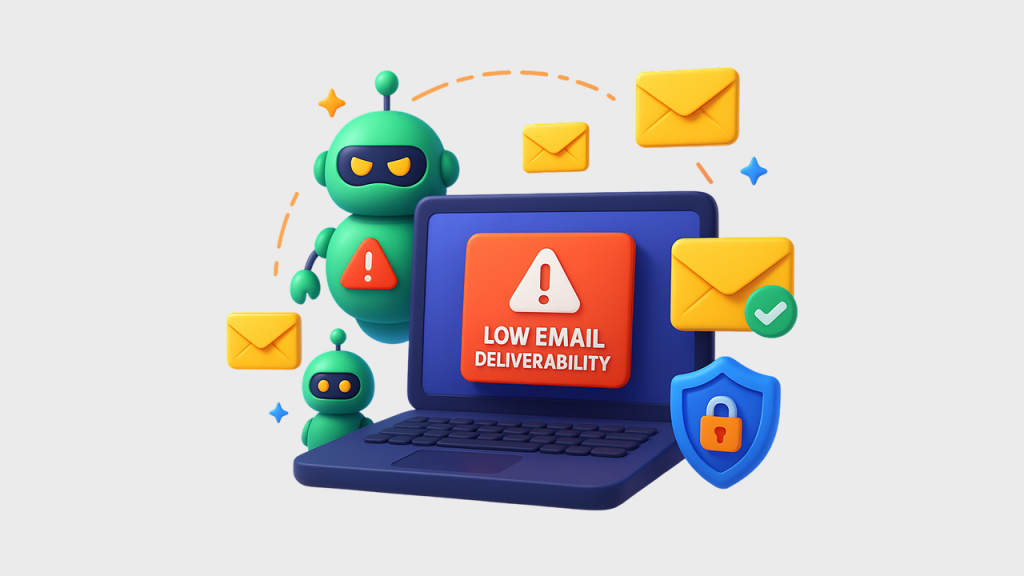
It’s worth understanding the motive, since it changes how you defend against it. Bots submit fake signups for a few distinct reasons:
Once you know why bots target forms, the tells become easier to recognize:
asdkj123@gmail.com, or emails that increment in a pattern (user1@, user2@, user3@).If you see several of these at once, especially a spike in signups followed by a spike in bounces, that’s a strong signal your forms are being targeted and not just receiving typos from real users.
Mailbox providers like Gmail and Outlook track how recipients respond to your mail: opens, clicks, complaints, and bounces. They use that behavior to decide whether your next email lands in the inbox or the spam folder. A list padded with bots and fake signups drags every one of those signals down at once.
A sender reputation that’s dropped because of list pollution doesn’t recover the moment you delete the bad rows. Providers watch sending patterns over time. For a deeper look at how that reputation is built and repaired, see our guide on email sender reputation.
Separately, and worth noting for context: <cite index=”17-1″>spam is estimated to make up nearly half of all email sent worldwide</cite>. That volume is exactly why mailbox providers filter so aggressively, and why a list with even a small percentage of bad addresses gets caught in that filtering.
Cleaning your list after the fact only solves half the problem. The other half is stopping bad signups from getting in at all.
Of these, real-time validation is the only method that catches a legitimate-looking but fake address. A real Gmail address a bot registered will pass CAPTCHA, and even double opt-in, if the bot also confirms it. Validation checks the address itself, not just whether something clicked a confirmation link. For a closer look at catching this specific pattern at signup, see our guide on detecting fake and disposable emails at signup.
Not all validation providers check the same things or catch the same patterns. When evaluating one, look past marketing claims and check for:
How do I know if my email list has been hit by bots?
Watch for a sudden spike in signups that doesn’t match a traffic increase you can explain, followed by a spike in bounces or spam complaints once you send to that batch. Reviewing signup timestamps and IP addresses for clustering is usually the fastest way to confirm it.
Does CAPTCHA alone stop fake signups?
It stops most automated bot submissions, but not manually-driven fake signups or bots built to solve CAPTCHAs. Pairing it with double opt-in and real-time email validation covers the gaps CAPTCHA leaves open.
Will double opt-in hurt my signup conversion rate?
It can reduce raw signup counts slightly, but the subscribers who do confirm are real and engaged, which protects deliverability more than a larger, unconfirmed list would.
Can real people trigger the same warning signs as bots?
Yes. A real person using a disposable email address to avoid marketing mail can look similar to a bot-created address in some checks. This is why validation tools distinguish between disposable, role-based, and genuinely invalid addresses rather than treating every risk signal the same way.
How often should I re-validate my list after cleaning it?
Every 60 to 90 days for actively growing lists, or immediately before any major campaign send. Addresses that were valid at signup can go stale, and new bot activity can reintroduce bad addresses between cleanups.
Spam bots and fake signups aren’t just an annoyance. They inflate your metrics, damage your deliverability, waste your sending budget, and in some cases expose your systems to abuse. The fix isn’t a single tool. It’s layering prevention at signup (CAPTCHA, honeypot fields, double opt-in) with real-time validation that catches what those methods can’t, and following up with ongoing list monitoring.
Real-time email verification like Gamalogic checks every address at signup, at the syntax, domain, and mailbox level, and flags disposable, role-based, and catch-all addresses before they ever reach your list. Combined with the signup-level defenses above, this is what actually keeps a list clean over time, rather than requiring a fresh cleanup after every bot attack.
Don’t let spam bots and fake signups undermine your email marketing. Sign up with Gamalogic and start validating in real time.


Warming up your email isn’t optional—it’s essential. Whether you're starting from a new domain or launching a cold outreach campaign, email warm-up helps you build trust with inbox providers, avoid spam folders, and protect your sender reputation from day one. This guide breaks down why it matters and how to do it right.
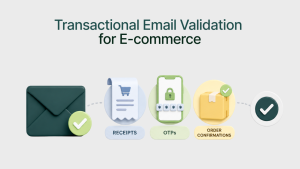
Improve transactional email validation for e-commerce with better OTP email delivery, receipt email deliverability, and order confirmation email optimization. Learn how email validation improves transactional email deliverability and customer communication workflows.

Identify role-based, disposable, and catch-all email addresses to protect your sender reputation and improve sales email performance.


 No credit card required
Post your Comment.