Tired of Catch-All Emails and Email Bounce? Here Is the Real Solution

07 Mar 2026
Sreerag
12 Minutes
Read
Email marketing should generate revenue, not damage your sender reputation.
But if you’re dealing with:
Then your email list hygiene is silently hurting your performance.
Let’s fix that.
What Is a Catch-All Email (And Why It’s Dangerous)
A catch-all domain is configured to accept emails sent to any address, even if the specific mailbox doesn’t exist.
For example:
All of them may appear “valid” at the server level.
The problem?
Catch-all domains often:
According to major mailbox providers like Gmail (see Gmail Postmaster Tools), engagement and bounce behavior directly influence domain reputation.
If you ignore catch-all detection, you risk long term deliverability damage.
Hard Bounce vs Soft Bounce: Why It Matters
Understanding bounce type is critical.
Consistent hard bounces signal poor list quality to mailbox systems like Microsoft Outlook.
And once your sender reputation drops, recovery becomes difficult.
Catch-all domains:
This directly affects:
If you want to understand how list hygiene affects growth, read:
👉 The Marketer’s Handbook to Email List Hygiene & Growth
That guide explains how clean data improves deliverability and performance.
If you are serious about reducing bounce rate and improving email deliverability, manual list cleaning is not enough.
Modern email marketing requires automation, real-time protection, and intelligent verification.
This is where an Email Validation API tool like Gamalogic becomes essential for deep email validation and verification.
An Email Validation API integrates directly with your:
Instead of cleaning your database after damage is done, it prevents bad data from entering your system in the first place.
If you want a deeper technical understanding, you can explore more about Email Validation API and How It Protects Your Email Marketing System, as well as How Email Validation Reduces Bounce Rate and Protects Sender Reputation, to see how validation technology safeguards your entire email marketing infrastructure
If you want a deeper technical understanding, you should know more about Email Validation API amd How It Protects Your Email Marketing System and How Email Validation Reduces Bounce Rate and Protects Sender Reputation
Advanced Email Validation API tools go far beyond basic format checking.
They use a multi layer verification process to evaluate every email address before it reaches your database.
Here’s how:
1️ Syntax Validation
The first layer checks if the email follows proper formatting rules.
It detects:
This immediately blocks simple human errors.
2️ Domain & MX Record Validation
This step verifies whether the domain actually exists.
It checks:
If no valid MX records exist, the email will eventually hard bounce.
Blocking these addresses protects your sender reputation early.
3️ SMTP Verification
SMTP (Simple Mail Transfer Protocol) verification checks whether the mailbox responds at the server level.
This helps identify:
It reduces hard bounce spikes during campaigns.
4️ Catch-All Domain Detection
Catch-all domains accept emails for any address, even fake ones.
Without detection, you may:
Catch-all detection flags these domains so you can:
This is critical for bulk email campaigns.
5️ Disposable Email Detection
Disposable emails are temporary inboxes used for:
They rarely engage long term.
Validation APIs maintain updated databases of temporary domains and block them in real-time.
Why This Multi Layer System Matters
Using an Email Validation API prevents:
It directly improves:
If you want to understand how pre-emptive validation blocks bad data before it harms performance, read:
👉 Detecting Fake / Disposable Emails from Signups(Pre-Emptive Validation)
Beyond Validation: Build a Bounce Proof Email System
Email validation is the foundation, but it works best when combined with:
✔ Double opt-in strategy
✔ Quarterly bulk list cleaning
✔ Engagement monitoring
✔ SPF, DKIM, and DMARC authentication
✔ Sender score tracking
Together, these create a bounce resistant email ecosystem.
If you’re looking for a complete strategy, explore:
👉 The Marketer’s Handbook to Email List Hygiene & Growth
How Real-Time Email Validation Prevents Bounce
Instead of cleaning after damage, use:
At signup forms, it:
Cleaner acquisition = better deliverability.
This directly improves:
Bulk Email List Cleaning for Existing Databases
Already have a large list?
Use bulk email validation to:
Email Deliverability Is a Reputation Game
Mailbox providers evaluate:
Make sure you also configure:
You can learn more about DMARC standards from DMARC.
Authentication + validation = powerful protection.
To know more, read: Authentication + Validation: SPF, DKIM, DMARC, and Why They Matter for Inbox Placement in 2026
How Catch-All Detection Protects Sender Reputation
Without catch-all filtering:
With catch-all detection:
This is essential for:
If you’re tired of:
Use a professional Email Validation API that includes:
That’s how you reduce bounce rate permanently.
Final Thoughts
Email bounce is not just a technical issue.
It is a revenue issue.
The longer you ignore catch-all email verification and proper email list hygiene, the more your sender reputation declines.
Fix the root problem:
✔ Validate at acquisition
✔ Clean regularly
✔ Monitor engagement
✔ Protect authentication
Ready to Reduce Email Bounce?
Start with:
Clean your database.
Protect your sender reputation.
Improve inbox placement.
Grow with confidence.
Get a Free Email List Audit
Download our Top 10 Cleanup Tips PDF
Build a high-quality email list that supports sustainable growth, protects domain reputation, and drives measurable revenue.
Because in a modern email acquisition strategy, clean data wins.



By integrating your CRM with your email marketing platform, you unlock powerful personalization, automation, and real-time targeting that drives engagement and revenue. From dynamic content to behavioral triggers and unified reporting, CRM-powered email campaigns connect smarter with your audience—boosting ROI, efficiency, and customer satisfaction.
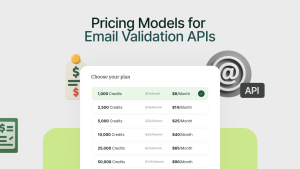
Discover how email validation API pricing works — from per-check costs to subscription models and hidden fees. Compare top providers and choose smartly.

This ultimate checklist helps marketers master email validation—ensuring higher deliverability, fewer bounces, and smarter campaigns. Stay ahead of spam filters and meet rising audience expectations with every send. Clean lists, better results.




 No credit card required





Post your Comment.