 Sign In














 Email Marketing
 ABM
ABM  List Building
  Lead Generation
  Growth Hacker
  Digital Marketing
  Data Enrichment
  Software as a Service
  Data as a Service
  Waterfall Enrichment
  Startup
  Revenue Performance
  Job Change Tracking
  Customer Data Platform
  CRM
CRM 


 Knowledge Base
  Video Tutorials
  Help Center
  Tarpitting Scoring
  ROI Calculator
  About us
  Contact us
  Testimonials
  Automation
SMTP Tarpitting, Anti-Spam & How Email Validation Reduces Abuse (2026 Guide)

21 Mar 2026
Sreerag
12 Minutes
Read

 Blog
FAQ
Case Studies
Knowledge Base
Video Tutorials
Help Center
SEG Validation
Tarpitting Scoring
ROI Calculator
About us
Contact us
Testimonials
Blog
FAQ
Case Studies
Knowledge Base
Video Tutorials
Help Center
SEG Validation
Tarpitting Scoring
ROI Calculator
About us
Contact us
Testimonials
Email marketing is no longer just about sending campaigns; it’s about navigating a complex ecosystem of anti-spam systems, security layers, and reputation checks.
If you’re facing:
You’re likely being impacted by SMTP tarpitting, a powerful anti-spam mechanism used by providers like Google and Microsoft.
But here’s what most marketers don’t realize:
SMTP tarpitting is not random; it’s triggered by poor data quality, suspicious sending patterns, and weak email verification security practices.
This guide covers:
By the end, you’ll understand not just how to avoid spam filters but SMTP Tarpitting, Anti-Spam & How Email Validation Reduces Abuse, email validation, authentication, and clean data practices.
SMTP Tarpitting is an anti-spam technique where a mail server intentionally slows down email communication to filter suspicious senders.
Instead of rejecting emails instantly, the server:
This behavior is part of the SMTP protocol defined under RFC standards and is widely implemented across email servers.
During the SMTP process:
At the RCPT TO stage, the server may:
This is known as SMTP session delay or connection stuttering.
Want to see how this works in practice? Check out our detailed breakdown: Behind the Scenes: How SMTP Tarpitting Fights Spam.
A real-world tarpitting system once trapped a spam bot for:
The result?
The spammer’s hosting provider shut down their account due to abnormal resource usage.
SMTP tarpitting doesn’t just block spam it:
Modern anti-spam systems combine multiple techniques:
Slows down communication intentionally
Temporarily rejects unknown senders and allows retries
Controls sending volume and frequency
Together, they form a layered defense system against abuse.
Most tarpitting issues don’t start at sending they start at data collection.
Poor email list hygiene introduces:
These signals tell ISPs that your system may be unsafe.
These issues often begin during onboarding.
Even genuine businesses get trapped when their data quality is poor.
Common triggers:
These signals affect:
In many cases, these issues start during user onboarding. Fake accounts, bot signups, and low-quality leads directly impact system trust.
Most tarpitting issues originate from bad data such as:
These indicate suspicious behavior to ISPs, leading to stricter filtering and delays.
Beyond performance, handling such data incorrectly can also create privacy risks. Since email addresses are considered personal data, validation systems must follow compliance rules.
This is explained in detail in Privacy & Compliance: Handling PII when Validating Email Addresses, where secure data handling becomes equally important as deliverability.
Poor data handling is not just a performance issue it’s a compliance risk.
Since email addresses are considered personal data, validation systems must follow proper data protection practices. This becomes especially important when building scalable verification systems that balance performance with privacy.
Most businesses clean their lists after damage is done.
Modern email systems require pre-emptive validation.
A professional email validation system performs:
This prevents:
Mainly Disposable Emails from Signups (Pre-emptive Validation), where blocking bad data at the entry point, For Detecting Fake emails, significantly improves performance.
Validation identifies risky or inactive email addresses before they trigger anti-spam systems.
Cleaner lists mean fewer retries and faster SMTP sessions.
Lower bounce rates and better engagement improve trust signals.
Eliminates bot signups and fake registrations that harm credibility.
Let’s break it down:
Sending 100,000 emails:
Without tarpitting:
With a 5-second delay:
If your list contains invalid data, the cost multiplies quickly.
Modern systems don’t just delay they adapt.
This makes sender reputation more important than ever.
To avoid anti-spam systems, combine:
A complete strategy combining these elements is explained in The Marketer’s Handbook to Email List Hygiene & Growth, where clean data directly impacts deliverability and ROI.
Email validation helps:
It also improves onboarding quality. Poor confirmation flows combined with bad data can reduce conversions significantly.
Using an Email Validation API during signup or form submission adds an extra layer of control by verifying email addresses in real time before they enter your database. This prevents invalid, disposable, or mistyped emails from affecting your confirmation flow.
That’s why aligning validation with your confirmation email strategy is critical. Avoiding common confirmation email mistakes ensures both data accuracy and user experience are optimized, leading to more reliable performance and stronger user relationships.
Future trends include:
As systems evolve, poor data quality will be penalized faster and more aggressively.
SMTP tarpitting is not the problem it’s a signal.
If your emails are being delayed or throttled:
Start with:
Because in modern email systems, success depends on quality, trust, and security not just volume.



The Marketer’s Handbook to Email List Hygiene & Growth explains how to clean email databases, reduce bounce rate, improve deliverability, and grow a high-quality subscriber list.
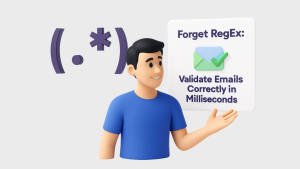
Still using RegEx to validate emails? It’s time to move on. While regular expressions may catch formatting issues, they miss the bigger picture—like whether the email actually exists. In this post, we’ll show you smarter, faster ways to validate emails in milliseconds without relying on outdated RegEx patterns.

Compare Klaviyo vs Mailchimp list cleaning: see what Smart Sending and Omnivore catch, and the validation gap both still miss, plus how to close it.


 No credit card required
Post your Comment.