 Sign In














 Email Marketing
 ABM
ABM  List Building
  Lead Generation
  Growth Hacker
  Digital Marketing
  Data Enrichment
  Software as a Service
  Data as a Service
  Waterfall Enrichment
  Startup
  Revenue Performance
  Job Change Tracking
  Customer Data Platform
  CRM
CRM 


 Knowledge Base
  Video Tutorials
  Help Center
  Tarpitting Scoring
  ROI Calculator
  About us
  Contact us
  Testimonials
  Automation
Preventing Fake Orders & Fraud with Email Verification

07 May 2026
Sreerag
12 Minutes
Read

 Blog
FAQ
Case Studies
Knowledge Base
Video Tutorials
Help Center
SEG Validation
Tarpitting Scoring
ROI Calculator
About us
Contact us
Testimonials
Blog
FAQ
Case Studies
Knowledge Base
Video Tutorials
Help Center
SEG Validation
Tarpitting Scoring
ROI Calculator
About us
Contact us
Testimonials
Fake orders and fraudulent signups are becoming a major challenge for modern e-commerce businesses. From disposable email addresses and bot-driven checkouts to fake customer accounts and payment abuse, low-quality user data can directly impact revenue, operational efficiency, and customer trust.
Many online stores invest heavily in paid acquisition, conversion optimization, and customer retention strategies, but overlook one critical layer of protection: ecommerce fraud email validation.
Without proper email verification at signup and checkout, businesses often face:
This is where email verification becomes an essential part of ecommerce risk reduction and customer data quality management.
Fraudulent activity in e-commerce is no longer limited to stolen cards. Today, fake users exploit free offers, abuse discounts, manipulate referral systems, and create multiple accounts using disposable email addresses.
Common ecommerce fraud patterns include:
These activities affect more than security. They reduce operational accuracy, inflate acquisition metrics, and damage long-term customer retention strategies.
For many brands, the hidden cost includes:
A strong email verification system works as an early-stage fraud prevention layer. Instead of allowing suspicious users into your ecosystem, validation helps filter risky accounts before checkout or onboarding begins.
Using a real-time email verification API during registration helps identify:
This improves signup data quality and reduces fake customer account prevention issues before they affect your systems.
Platforms like Stripe, Cloudflare, and reCAPTCHA are often combined with email verification to create layered ecommerce fraud prevention systems.
One of the biggest sources of ecommerce signup fraud prevention is disposable email abuse.
Fraudsters frequently use temporary inbox providers to:
Advanced email validation systems such as Gamalogic email validation tools detect disposable domains in real time and block suspicious registrations instantly.
This significantly improves account integrity and helps stop fake orders before payment processing begins.
Modern email verification is no longer limited to syntax checks.
Advanced fraud detection systems analyze:
Combined with tools like MaxMind, ecommerce businesses can build stronger fraud intelligence workflows and identify high-risk users early in the customer journey.
This approach directly supports email verification in fraud detection by improving trust signals and reducing suspicious activity across the platform.
Fake users do more than create fraudulent orders. They distort business intelligence.
When invalid accounts enter your system:
This creates poor decision-making across marketing, product, and retention teams.
Clean email data improves:
Transactional emails such as:
must reach real users instantly.
Invalid or fake email addresses can cause delivery failures, bounce rate increases, and poor customer experience.
This becomes especially important for transactional email validation for receipts and OTP workflows, where reliable communication directly impacts trust and order completion.
Many ecommerce businesses lose revenue because abandoned cart emails never reach real users.
When signup forms accept fake or mistyped email addresses:
Using validation at checkout improves email deliverability and ensures cart abandonment recovery campaigns reach genuine customers,this directly improves delivery accuracy and customer engagement.
Retention marketing depends on accurate customer communication.
If your database contains fake users or inactive accounts:
Maintaining verified customer data supports long-term ecommerce growth and stronger lifecycle communication.
This is why many ecommerce brands invest in clean email lists for customer retention optimization to improve repeat purchases and long-term customer value.
| Without Email Verification | With Email Verification |
|---|---|
| Fake customer accounts | Verified customer identities |
| Higher fraud risk | Improved fraud detection |
| Disposable email abuse | Blocked temporary domains |
| Poor transactional delivery | Reliable email communication |
| Distorted analytics | Accurate customer insights |
| Increased chargebacks | Better ecommerce trust signals |
Do not wait until after fraud occurs. Real-time email verification helps prevent fake users before transactions begin.
Email validation works best alongside:
High bounce rates and poor engagement often signal data quality issues.
Monitoring deliverability helps identify:
Choose a solution that supports:
Solutions like Gamalogic, zerobounce help ecommerce businesses maintain clean customer data while reducing fraud and improving lifecycle communication.
Ecommerce fraud is no longer just a payment problem. It starts at signup.
Fake users, disposable emails, and suspicious registrations weaken customer trust, distort analytics, and increase operational costs.
Email verification helps ecommerce businesses:
Most importantly, it ensures that only real customers enter your growth ecosystem.
Improve ecommerce security and customer data quality with real-time email validation.
Use email verification to:
👉 Try Gamalogic Email Validation API to protect your ecommerce platform with scalable real-time email verification.



Looking for better options than Abstract API? Top 5 Email Validation API Alternatives to Abstract API in 2026 with pricing, features, and accuracy comparison.
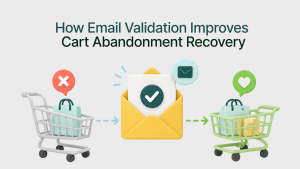
Learn how cart recovery email validation improves abandoned cart recovery, ecommerce email deliverability, bounce reduction, and customer retention. Discover how clean email lists help ecommerce brands recover more lost sales and optimize recovery campaigns.
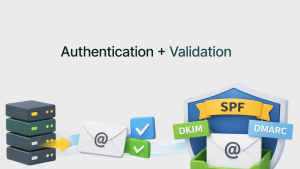
Learn how SPF, DKIM, DMARC, and email validation reduce bounce rate, protect sender reputation, and boost inbox placement in 2026. Essential guide for marketers.


 No credit card required
Post your Comment.