 Sign In














 Email Marketing
 ABM
ABM  List Building
  Lead Generation
  Growth Hacker
  Digital Marketing
  Data Enrichment
  Software as a Service
  Data as a Service
  Waterfall Enrichment
  Startup
  Revenue Performance
  Job Change Tracking
  Customer Data Platform
  CRM
CRM 


 Knowledge Base
  Video Tutorials
  Help Center
  Tarpitting Scoring
  ROI Calculator
  About us
  Contact us
  Testimonials
  Automation
How Email Validation Improves Cart Abandonment Recovery

07 May 2026
Sreerag
12 Minutes
Read

 Blog
FAQ
Case Studies
Knowledge Base
Video Tutorials
Help Center
SEG Validation
Tarpitting Scoring
ROI Calculator
About us
Contact us
Testimonials
Blog
FAQ
Case Studies
Knowledge Base
Video Tutorials
Help Center
SEG Validation
Tarpitting Scoring
ROI Calculator
About us
Contact us
Testimonials
Cart abandonment is one of the biggest revenue leaks in ecommerce. Even after customers show purchase intent, many recovery emails never reach the inbox because of invalid, fake, or mistyped email addresses.
Poor email data directly affects:
This is where cart recovery email validation becomes essential for ecommerce growth.
This guide covers:
Strong email validation ecommerce practices also support customer retention, lifecycle automation, and long-term revenue growth for ecommerce brands.
Many ecommerce businesses invest heavily in:
But abandoned cart recovery still underperforms because of poor email data quality.
Common causes include:
When recovery emails bounce or fail to deliver, businesses lose both revenue and customer engagement opportunities.
This directly impacts:
Invalid email addresses affect more than just one campaign.
Poor data quality can lead to:
For ecommerce brands using platforms like Shopify, Klaviyo, Mailchimp, or Omnisend, even small delivery failures can impact thousands of dollars in lost revenue.
This is why maintaining clean email lists for better cart recovery becomes essential for ecommerce lifecycle marketing and long-term engagement.
Email validation checks whether an email address is:
This reduces ecommerce email bounce reduction issues and improves recovery email performance.
With fewer bounced emails:
Mailbox providers monitor bounce rates and email quality closely.
If ecommerce brands continue sending emails to invalid users:
This is why email deliverability best practices for ecommerce always include real-time email validation and list hygiene management.
Better deliverability means:
Many users enter temporary or disposable email addresses during checkout.
These addresses:
Real-time email validation helps block:
This creates cleaner customer databases and improves ecommerce lifecycle emails across onboarding, promotions, and cart recovery workflows.
Reducing fake users also strengthens Preventing Fake Orders & Fraud with Email Verification, where email validation helps ecommerce brands protect checkout systems and reduce fraudulent activity.
Cart recovery is not just one email.
Modern ecommerce brands use:
These workflows depend on accurate customer data.
Clean email validation ensures users continue receiving:
This directly improves ecommerce email engagement and customer retention performance.
Many ecommerce brands clean their lists later.
That approach creates problems because invalid users already entered the system.
Using real-time email validation for ecommerce signup flows helps detect issues immediately during:
This improves customer data quality before recovery campaigns even begin.
Platforms integrated with Gamalogic email validation API can automatically validate customer emails during checkout, helping ecommerce stores reduce bounce rates and improve recovery email performance in real time.
| Without Email Validation | With Email Validation |
|---|---|
| High bounce rates | Better inbox placement |
| Fake customer accounts | Verified customer emails |
| Poor recovery rates | Higher cart recovery conversions |
| Low engagement | Improved email engagement |
| Weak sender reputation | Strong deliverability performance |
Many ecommerce brands focus only on email design and offers.
But even the best abandoned cart email will fail if it never reaches the inbox.
This is why ecommerce businesses increasingly combine:
Together, these systems improve:
Clean customer data also strengthens Improving Customer Lifetime Value with Clean Email Lists, where accurate email engagement helps ecommerce brands build stronger retention and loyalty strategies.
Prevent invalid users before they enter your system.
Using real time emil validation api will detect fake and disposable addresses instantly.
Regular list cleaning improves long-term deliverability.
High bounce rates indicate poor customer data quality.
Connect validation tools with:
for automated lifecycle email optimization.
Cart abandonment recovery depends on one critical factor:
Your emails must reach real customers.
Without clean customer data:
Email validation helps ecommerce brands improve cart recovery optimization, reduce bounce rates, and strengthen lifecycle automation performance.
For ecommerce businesses focused on scalable retention and better customer engagement, clean email data becomes a core part of revenue growth infrastructure.
Improve your abandoned cart recovery performance with clean customer data.
Use real-time email validation to:
👉 Start validating ecommerce customer emails with Gamalogic email validation API today.



Learn how email validation customer retention strategies improve ecommerce engagement, lifecycle email optimization, deliverability, repeat purchases, and Customer Lifetime Value (CLV) using clean email lists.
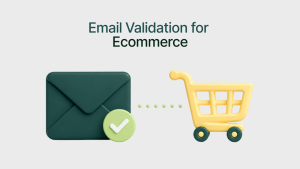
Learn how email validation ecommerce strategies improve cart recovery, transactional email deliverability, customer retention, ecommerce fraud prevention, and lifecycle marketing performance using clean customer data.
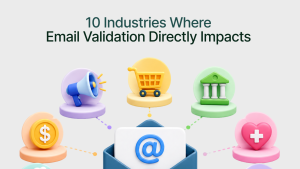
Learn how businesses in ecommerce, SaaS, healthcare, finance, education, and more use email validation to improve inbox placement, reduce bounces, prevent fraud, and maximize revenue.


 No credit card required
Post your Comment.