 Sign In














 Email Marketing
 ABM
ABM  List Building
  Lead Generation
  Growth Hacker
  Digital Marketing
  Data Enrichment
  Software as a Service
  Data as a Service
  Waterfall Enrichment
  Startup
  Revenue Performance
  Job Change Tracking
  Customer Data Platform
  CRM
CRM 


 Knowledge Base
  Video Tutorials
  Help Center
  Tarpitting Scoring
  ROI Calculator
  About us
  Contact us
  Testimonials
  Automation
Best Email Validation Tools (Compared by Accuracy, Features, and Real Pricing)

02 Sep 2026
Sreerag
12 Minutes
Read

 Blog
FAQ
Case Studies
Knowledge Base
Video Tutorials
Help Center
SEG Validation
Tarpitting Scoring
ROI Calculator
About us
Contact us
Testimonials
Blog
FAQ
Case Studies
Knowledge Base
Video Tutorials
Help Center
SEG Validation
Tarpitting Scoring
ROI Calculator
About us
Contact us
Testimonials
A bad email address costs more than a bounce. It costs you sender reputation, it burns a lead you paid to acquire, and if it lands on a spam trap, it can get your entire sending domain throttled by Gmail or Outlook. That’s the whole reason email validation tools exist as a category and why picking the wrong one is expensive in ways that don’t show up for weeks.
An email validation tool checks whether an address is correctly formatted and its domain can receive mail. True verification goes further, confirming the specific mailbox is active with a live SMTP check. Most tools on this list Gamalogic included now combine both, plus catch-all detection, disposable/role-based flagging, and spam-trap screening, in a single API call.
Here’s what almost every “best email verifier” roundup won’t tell you: nearly every vendor claims 97–99%+ accuracy, and almost none of them have tested it. Worse, read six or seven of these guides and you’ll notice each one is published by a vendor, and each one ranks itself first. Below, we separate vendor-claimed accuracy from independently benchmarked accuracy sourced from a real, published third-party test against 3,000 real business email addresses because that gap is the single most useful thing to know before you spend money on credits. Where no independent test exists, including for Gamalogic’s own number, we label it a claim, not a fact.
| SLNO | Tool | Best For | Accuracy (independently tested / claimed) | Native Integrations | Free Credits | Starting Price | Catch-All Detection | Email Finder |
|---|---|---|---|---|---|---|---|---|
| 1 | Gamalogic | Real-time validation + verification in one API call | Not yet independently benchmarked / 99.6% claimed | 100+ (22+ native ESP/CRM, plus Zapier/Make/n8n/Pabbly) | 500 | $5 / 1,000 credits | Yes (SEG + tarpit aware) | Yes |
| 2 | Hunter | All-in-one outreach + verification | 70.0% (tested, 1 of 15) | 24 native (HubSpot, Salesforce, Pipedrive, Zoho, Sheets) | 50/month | $49/mo | Partial | Yes |
| 3 | Clearout | GTM teams needing verification + CRM hygiene | 68.4% (tested, #2) / 99.73% claimed | 100+ (native CRMs, webhooks, Sheets, WordPress) | 100 | $23/mo (3,000 credits) | Yes (advanced resolver) | Yes |
| 4 | Kickbox | Mid-size teams wanting a quality score | 67.5% (tested, #3) / 99.5% claimed | ~10 native ESPs (Mailchimp, HubSpot, SendGrid, Klaviyo, Brevo) | 100 | $5 / 500 credits | No | No |
| 5 | QuickEmailVerification | Long-established, low-cost verification with transparent pricing | Not independently benchmarked / 99% claimed | 50+ native (Mailchimp, HubSpot, Zoho, SendGrid, Marketo, GetResponse) + Zapier/Make | 100 | $4 / 500 credits | No native advanced resolver | No |
| 6 | NeverBounce | CRM-synced automated list cleaning | 63.2% (tested) / 99% claimed | 88 native | 10 | $0.008/email (PAYG) | No native resolver | No |
| 7 | ZeroBounce | Deliverability monitoring + data enrichment | 60.7% (tested) / 99% claimed | 45+ native | 100/month | $15/mo | Yes | Yes |
| 8 | Emailable | Most integrations, fastest raw speed | 59.9% (tested) / 99%+ claimed | 90–92 native the widest library on this list | 250 | $25.50/mo | No native resolver | No |
| 9 | Debounce | Cheapest cost-per-verification at scale | 59.6% (tested) | Dozens native (HubSpot, Mailchimp, Sendinblue) | 100 | $15 / 10,000 credits | Partial (lead finder add-on) | Yes |
| 10 | Verifalia | High-volume bulk cleaning with adjustable verification depth | Not independently benchmarked / 98%+ claimed (real-world third-party estimates ~92–95%) | Zapier + Pipedream (6,000+ apps), Google Sheets add-on, JS widget — no native CRM/ESP connectors | 25/day | $39/mo (5,000 credits) or ~$0.0005–0.008/credit PAYG | Yes (3 selectable quality levels: Standard/High/Extreme) | No |
| 11 | Abstract | Developer-first, API-only real-time checks | Not independently benchmarked | None native API-only (Zapier-style bridges only) | 100/month | $17/mo (billed annually) | Yes | No |
| 12 | MillionVerifier | Cheapest bulk cleaning at high volume | Not independently benchmarked / 99%+ claimed | 17 native | 500 | $0.0008–0.003/credit (PAYG) | No native resolver | No |
Independently tested accuracy figures are drawn from a third-party benchmark of 15 verifiers run against 3,000 real business email addresses segmented by company size see methodology and full citation below. Claimed figures are each vendor’s own published number and are not independently verified; always confirm current numbers on the vendor’s site, since credit tiers, pricing, and claims change often.
Most roundups in this space score every tool the same way features, price, integrations and then rank whoever wrote the article as the winner without saying why. We wanted the accuracy numbers on this page to hold up to scrutiny, so here’s exactly where they came from:
[Once you run your own accuracy test on a sample list including some catch-all and SEG-protected domains, compared against a couple of competitors the results go here.]
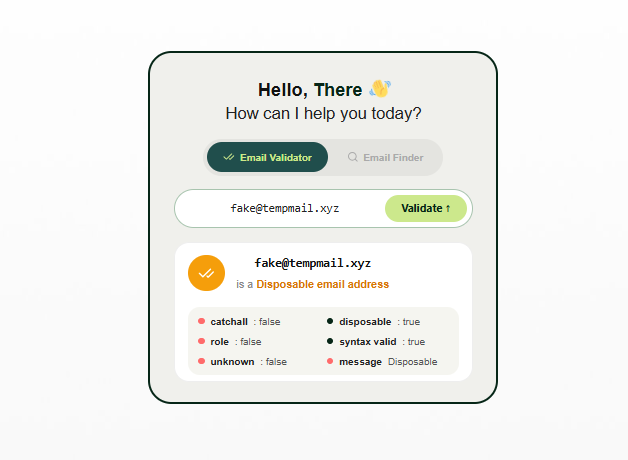
Most tools on this list make you choose between a fast syntax-only “validator” and a slower, deeper “verifier” that actually pings the mail server.
Gamalogic runs both, plus five additional risk layers, inside one request. Its published validation pipeline runs in this order: syntax check → DNS validation → catch-all detection and SMTP tarpit timing check → SMTP mailbox validation → SEG (Secure Email Gateway) validation → spam trap, honeypot, and blacklist checks → categorization → a calculated deliverability “Send Score.” That’s a materially longer chain than the 2–3 step process most competitors on this page publish, and it’s worth verifying directly against your own list of enterprise and gateway-protected domains, since that’s exactly where shorter pipelines tend to return a vague “unknown” instead of a real answer.
Where it fits: developers wiring validation directly into a signup form, checkout flow, or CRM import, and marketers who want to clean an existing list in bulk without spinning up a second tool for real-time checks or a third for lead sourcing.
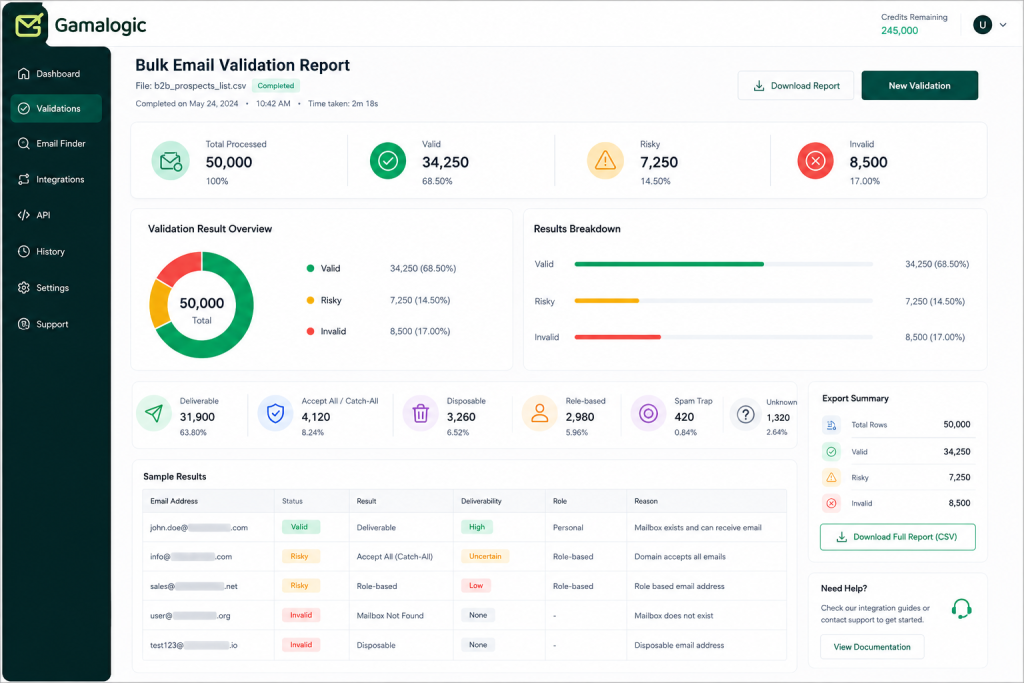
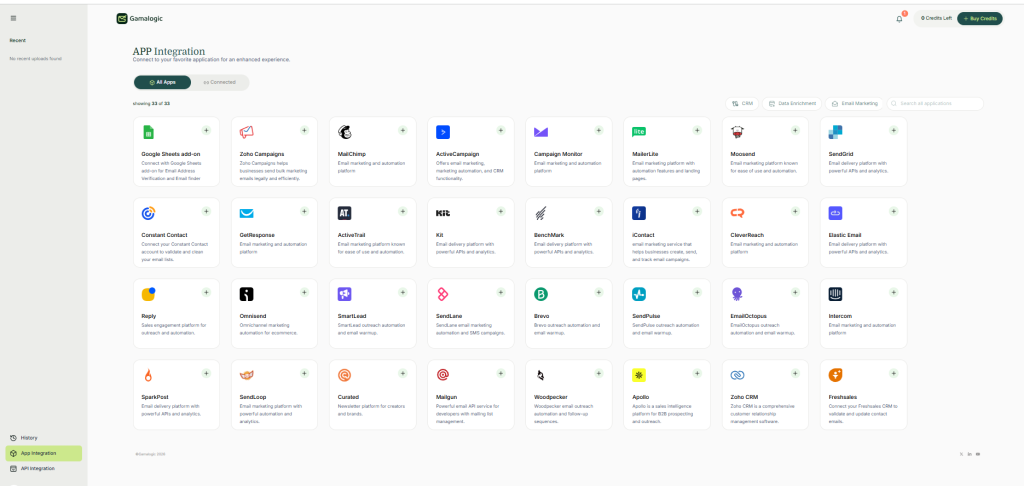
Gamalogic uses a straightforward credit model instead of tiered subscriptions with feature gates:
That $5–7/1,000-credit range sits at or below what, ZeroBounce ($8/1,000 PAYG), and NeverBounce ($8/1,000) charge for equivalent volume while including the SMTP-level, SEG, and spam-trap checks several of those vendors treat as a premium-tier feature.
DQ Global, a customer data quality and CRM data-management provider, integrated Gamalogic’s real-time validation directly into Microsoft Dynamics 365 to fix a recurring problem: their prior provider was returning cached, non-real-time results and struggling with catch-all, SEG, and tarpit-protected addresses. After switching to real-time validation and using it to cleanse existing CRM records, DQ Global cut bounce-related customer complaints by 50%, roughly doubled customer satisfaction, and improved overall email data accuracy by 25% all while eliminating stale, cached validation results in favor of continuously updated data.

Overview: All-in-one outreach platform, Email Finder, Domain Search, cold-email Sequences, and a verifier bundled under one account, not a standalone verifier.
Accuracy: #1 in the independent 15-tool benchmark at 70.0% overall (71.3% small-business domains / 69.0% medium / 69.7% large). Caveat: the benchmark dataset was partly built from Hunter’s own outreach data.
Pros
Cons

Overview: Verification bundled with GTM/RevOps tooling: Form Guard (real-time signup validation), Data Pulse (automated CRM monitoring), and a LinkedIn-based email finder.
Accuracy: #2 in the benchmark at 68.4% overall (68.3% small / 67.8% medium / 69.0% large, the closest margin to Hunter on large-business domains).
Pros
Cons
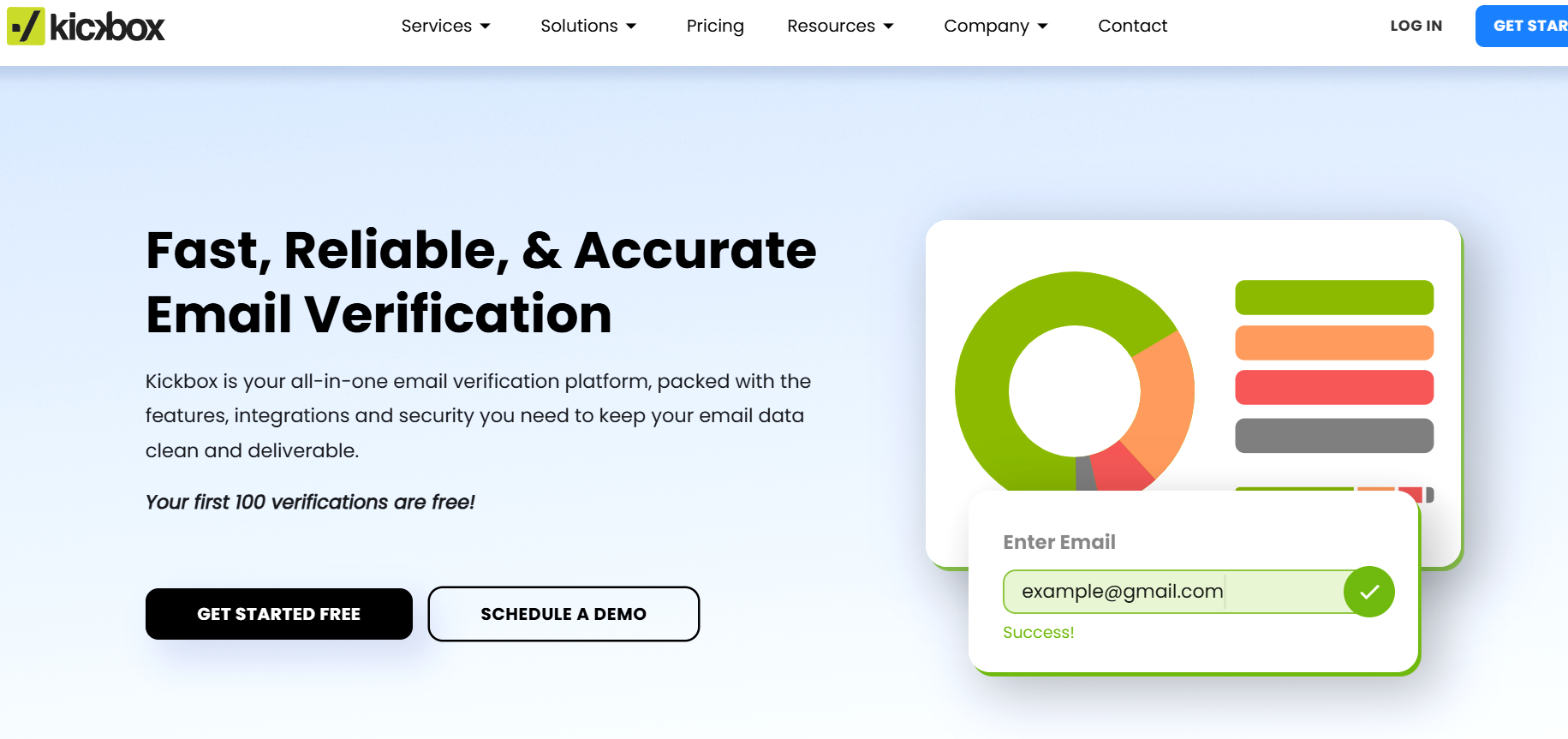
Overview: Verifier with a proprietary Sendex™ quality score layered on top of standard valid/invalid/risky classification.
Accuracy: #3 in the benchmark at 67.5% overall.
Pros
Cons
Overview: One of the longest-running names in the category, trusted by 300,000+ businesses including PwC, Accenture, IBM, Salesforce, Cisco, and Adobe. Runs both a bulk verifier (drag-and-drop CSV) and a real-time API, with a straightforward, transparent pricing page rather than a “contact sales” wall at low volume.
Accuracy: Not part of the independently published 15-tool benchmark cited elsewhere in this guide, so there’s no third-party number to weigh here, only a vendor-claimed 99% accuracy, which QuickEmailVerification says it has sustained over the past five years.
Pros
Cons
Overview: Owned by ZoomInfo. Built for automated, ongoing hygiene, “Sync” connects to your ESP/CRM and removes invalid contacts daily, no manual re-uploads.
Accuracy: Mid-pack in the benchmark at 63.2% overall.
Pros
Cons
Overview: Full deliverability suite, not just a verifier: AI-based scoring, blocklist monitoring across 200+ lists, inbox placement testing, “Activity Data” engagement scoring. Leans into “military-grade” security messaging (SOC 2, GDPR, PCI-DSS, HIPAA).
Accuracy: 60.7% overall in the benchmark (66.2% on large-business domains specifically, its best segment).
Pros
Cons
Overview: Widest disclosed integration library on this list, plus benchmarked speed (~0.012 sec/email, among the fastest tested).
Accuracy: 59.9% overall in the benchmark.
Pros
Cons
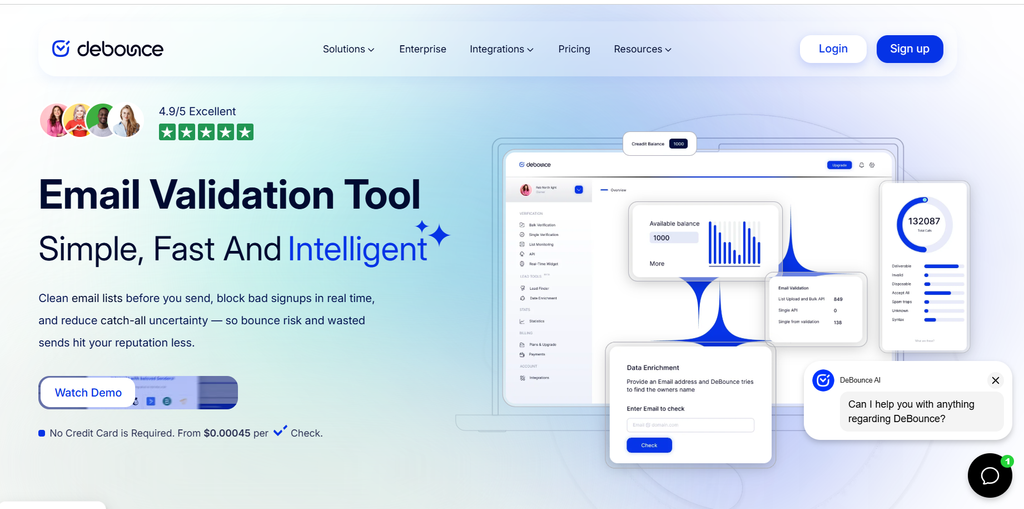
Overview: Core validation (syntax, MX, SMTP, disposable, duplicate, catch-all) plus lead-finding and data-appending/enrichment, a light email-finder capability alongside verification.
Accuracy: 59.6% overall in the benchmark, one of the cheapest tools per verification on this list.
Pros
Cons
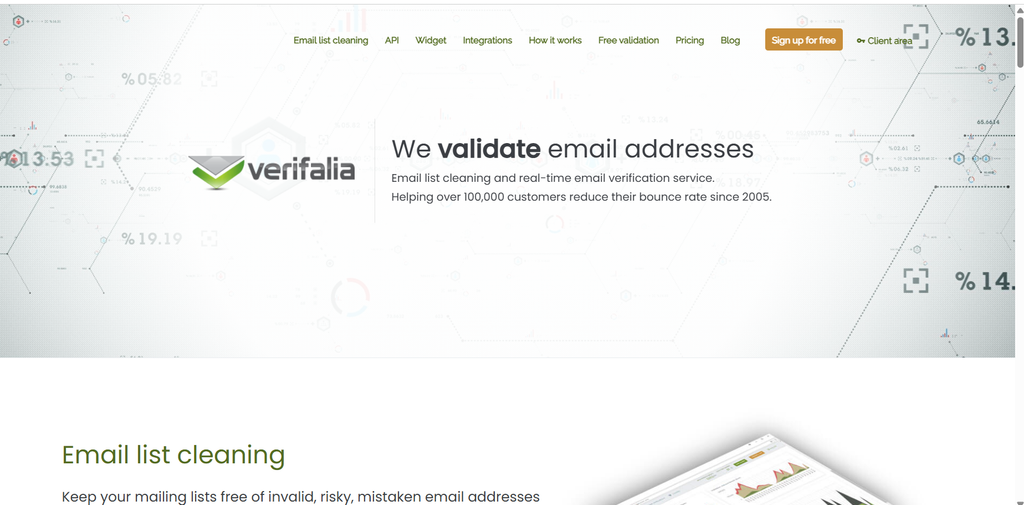
Overview: Founded 2005, predates most of the category by a decade, serving 100,000+ customers across 190+ countries. Offers three selectable verification depths (Standard/High/Extreme) and explicit non-Latin alphabet support (Chinese, Arabic, Cyrillic).
Accuracy: Not independently benchmarked. Claims 98%+; third-party reviews report real-world results closer to 92–95%.
Pros
Cons
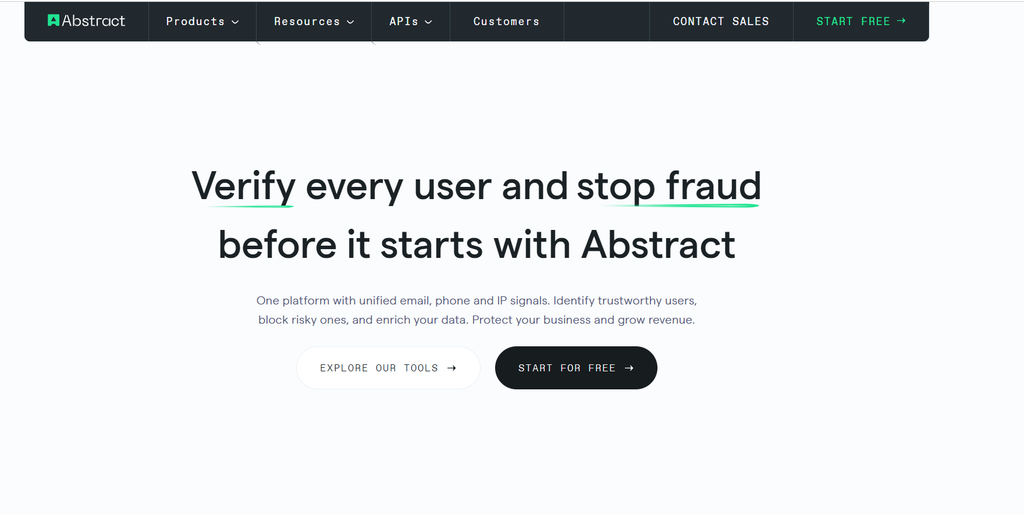
Overview: Pure API, no dashboard, built to sit inline at signup/checkout so bad addresses never reach your database. One call returns deliverability status, quality score, disposable/free-provider flag, catch-all status, and typo suggestions.
Accuracy: Not independently benchmarked.
Pros
Cons
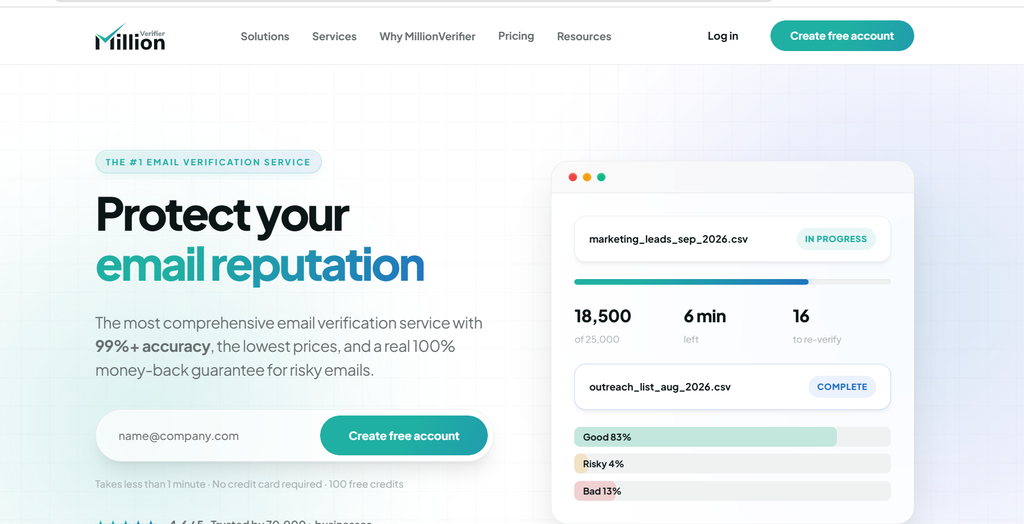
Overview: Formerly HuBoCo. Built purely for cleaning very large bulk lists cheaply, automatic cleaning on submission plus a real-time API.
Accuracy: Not independently benchmarked.
Pros
Cons
| Tool | Catch-All Resolution | Live SMTP Check | Disposable Detection | Google Sheets | Native Integrations |
|---|---|---|---|---|---|
| Gamalogic | SEG + tarpit-aware, resolves accept-all domains | Yes | Yes | Yes (validation and add on) | 100+ (22+ native ESP/CRM + Zapier/Make/n8n/Pabbly) |
| Hunter | Partial (proprietary resolution on some) | Yes | No | Yes | 24 |
| Clearout | Yes, advanced resolver | Yes | Yes | Yes | 100+ |
| Kickbox | No | Yes | No | Yes | ~10 named ESPs |
| QuickEmailVerification | No | Yes | Yes | No | 50+ |
| NeverBounce | No native resolver | Yes | No dedicated flag | No | 88 |
| ZeroBounce | Yes | Yes | Yes | Yes | 45+ |
| Emailable | No native resolver | Yes | Yes | Yes | 90–92 (widest disclosed) |
| Debounce | Partial | Yes | Yes | Yes | Dozens |
| Verifalia | Yes (3 quality levels, catch-all detection) | Yes | Yes | Yes | 0 native (Zapier/Pipedream + JS widget) |
| Abstract | Yes (score-based) | Yes | Yes | No | 0 native (API-only) |
| MillionVerifier | No native resolver | Yes | No | No | 17 |
A number in this column only matters if the specific tool you already run is on the list Emailable’s 90+ connections and Clearout’s 100+ are the widest disclosed libraries here, but Abstract’s zero native integrations aren’t a weakness for a developer calling its API directly, and Allegrow’s three are deliberately chosen for teams already living inside Outreach or Salesloft. Match the count to your actual stack, not to whichever number is biggest.
Skip the “it depends” answer here’s the actual decision logic:
In the spirit of the same transparency this guide asks of every other vendor, here’s what’s currently a claim rather than a tested result on our own listing and what we’re doing about it.
We’d rather tell you what’s not proven yet than quietly leave it out.
What’s the difference between email validation and email verification?
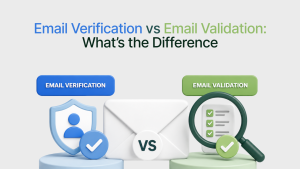
Validation checks an email’s syntax and domain format without contacting a mail server it’s fast but can’t confirm the mailbox actually exists. Verification goes further: it looks up MX records and performs a live SMTP handshake to confirm the specific inbox is real and accepting mail. Some tools, including Gamalogic, run both checks plus catch-all, disposable, role-based, and spam-trap screening in a single API call so you don’t need multiple products.
Why do so many tools return “unknown” or “accept-all” for the same address?
Catch-all (accept-all) domains are configured to accept mail for any address at that domain, whether or not a specific mailbox exists, which makes a simple SMTP ping useless for confirming deliverability. Tools vary widely in how hard they try to resolve catch-alls beyond that default “unknown” answer per the independent benchmark cited above, accuracy consistently drops across every tested tool once catch-all-heavy medium and large business domains enter the sample. This is one of the biggest real-world gaps between tools on this list, worth testing directly against your own list before committing to a vendor.
Is a 99% accuracy claim on a vendor’s homepage trustworthy?
Treat it as a marketing figure rather than a guarantee. Nearly every tool on this list advertises 97–99%+ accuracy, but the independent, side-by-side benchmark cited throughout this article found real-world accuracy ranging from roughly 31% to 70% across 15 tools tested against 3,000 real business addresses a wide gap from the homepage claims. Ask any vendor for their testing methodology, or test a sample of your own list before buying credits in bulk.
Do I need real-time API validation, bulk list cleaning, or an email finder or all three?
If you’re collecting new emails through a signup form, checkout, or CRM import, real-time API validation stops bad addresses before they ever enter your database. If you already have an existing list that’s decayed over time, bulk verification cleans what’s already there. If you’re building a list from scratch from a name and company domain rather than cleaning addresses you already collected you need an email finder, which is a distinct capability that not every tool on this list offers (see the comparison table above). Most growing teams eventually need all three; check whether a shortlisted tool bundles them or charges separately for each.
How much does email validation typically cost?
Most providers price on a per-credit model rather than a flat subscription, generally in the $4–$10 per 1,000 credits range at entry-level volume, dropping as you scale. Gamalogic’s published range is $5–7 per 1,000 credits with no expiry on unused credits; MillionVerifier and Debounce undercut that at very high volume but with a shallower check per address. Compare a vendor’s pay-as-you-go rate directly (not just their advertised monthly plan) before assuming which tool is actually cheaper for your volume.
Should I worry about disposable and role-based email addresses separately from invalid ones?
Yes they’re a different risk category. A disposable address (from services like Mailinator or Guerrilla Mail) is technically deliverable for a short window but useless for long-term communication, while a role-based address (info@, support@, admin@) is often deliverable but rarely tied to an individual decision-maker. Most tools on this list flag both categories separately from a simple valid/invalid split; check that a shortlisted tool actually surfaces these as distinct flags rather than folding them into a generic “risky” bucket.
What is SEG detection, and why does it matter?
A Secure Email Gateway (SEG) sits in front of a company’s real mail server and intercepts, filters, or masks the true inbox status to protect against spam and phishing. A verifier that doesn’t specifically account for SEGs can misread a gateway’s response as either a false “valid” or an unhelpful “unknown” for addresses at security-conscious enterprise domains which is exactly the segment where the independent benchmark cited above shows every tested tool’s accuracy drop the most. Gamalogic names SEG validation as a distinct step in its pipeline rather than folding it into a generic catch-all claim, which is worth confirming yourself against any gateway-protected domains in your own list.
Every tool on this list can validate an email address. The differences that actually matter show up in the edge cases: catch-all domains, SEG-protected enterprise inboxes, and whether a vendor’s accuracy claim has ever been tested by anyone besides the vendor.
If you’re validating at the point of signup and want syntax, SMTP, SEG, and spam-trap checks handled in one call plus an email finder for addresses you don’t have yet try Gamalogic free with 500 credits, no card required. If your priority is the highest independently-tested raw accuracy and you don’t mind a broader outreach subscription, Hunter is still the strongest tested performer on this list.
Whichever tool you shortlist, the fastest way to know if it’s right for your list is to test it against your own data including a few catch-all and gateway-protected domains before you buy credits in bulk.



Say goodbye to messy email lists and complex integrations. Gamalogic’s powerful (and free!) Google Sheets email validation add-on is every digital marketer’s dream tool. With thousands of users and a seamless setup, this tool makes real-time email verification fast, accurate, and easy—right from your spreadsheet. Whether you're in lead gen or email outreach, boost your campaign performance with just a few clicks.

Catch-all emails and high bounce rates hurting your campaigns? Learn how email validation APIs detect risky addresses, prevent fake signups, and improve email deliverability.


 No credit card required
Post your Comment.