 Sign In














 Email Marketing
 ABM
ABM  List Building
  Lead Generation
  Growth Hacker
  Digital Marketing
  Data Enrichment
  Software as a Service
  Data as a Service
  Waterfall Enrichment
  Startup
  Revenue Performance
  Job Change Tracking
  Customer Data Platform
  CRM
CRM 


 Knowledge Base
  Video Tutorials
  Help Center
  Tarpitting Scoring
  ROI Calculator
  About us
  Contact us
  Testimonials
  Automation
Klaviyo vs Mailchimp List Cleaning: What Their Built-In Tools Catch, and What They Miss

23 Jul 2026
Sreerag
12 Minutes
Read

 Blog
FAQ
Case Studies
Knowledge Base
Video Tutorials
Help Center
SEG Validation
Tarpitting Scoring
ROI Calculator
About us
Contact us
Testimonials
Blog
FAQ
Case Studies
Knowledge Base
Video Tutorials
Help Center
SEG Validation
Tarpitting Scoring
ROI Calculator
About us
Contact us
Testimonials
Both Klaviyo and Mailchimp include native tools that manage sending frequency and reduce bounce rate, Klaviyo’s Smart Sending and Mailchimp’s send-time optimization. Neither one, however, checks whether an address is disposable, sitting on a catch-all domain, or a known spam trap before you send to it, that’s a separate layer, called email validation, and the gap is identical on both platforms. Mailchimp connects to Gamalogic email validatior directly today with a no-code integration; Klaviyo lists can be validated now via API or CSV upload, with native integration on the way.
Search “Klaviyo vs Mailchimp deliverability” and you’ll find plenty of takes on which platform “wins.” That’s the wrong question. Both platforms run mature sending infrastructure and both include real, working list management features. The more useful question is: what do those built-in features actually catch, and what do they miss, because that gap is where most avoidable bounces and reputation damage happen, on either platform.
Klaviyo’s Smart Sending feature automatically suppresses recipients who’ve received a certain number of emails within a defined time window, preventing over-sending to the same audience, a real and common cause of deliverability decline, especially in flow-heavy ecommerce sending. It’s a genuine engagement-management tool.
What it doesn’t do: check whether an address exists at all. Smart Sending manages how often you email someone already on your list it has no mechanism for catching a mistyped signup, a disposable address from a one-time-use inbox, or a catch-all domain that accepts all mail without confirming a real mailbox exists behind it. Those addresses enter your list before Smart Sending ever gets a chance to manage their frequency.
Mailchimp leans on send-time optimization and, on higher-tier plans, dedicated IP options for senders who want more direct control over inbox placement. These help real subscribers receive email at better times and give high-volume senders more reputation isolation.
Same gap applies here: send-time optimization decides when to email an existing contact, it doesn’t verify that the contact is a real, reachable mailbox in the first place. A role-based address like info@ or a mistyped domain from a signup form passes straight through Mailchimp’s native tools untouched, the same way it would on any platform.
Every mailbox provider, Gmail, Outlook, Yahoo, scores your sending domain based on bounce rate, spam complaints, and engagement, and that score follows every campaign afterward, not just the one sent to a dirty list. This is true regardless of ESP; it’s how inbox providers evaluate senders industry-wide, not a platform-specific mechanism.
There’s also a billing angle worth knowing, since it changes the cost of skipping validation: Mailchimp charges based on total contacts across all your lists, so an unvalidated, duplicated subscriber can be billed multiple times. Klaviyo charges per unique active subscriber regardless of list count. Either way, a bloated, unvalidated list costs you before it even sends, not just in bounce rate, but in what you pay to keep it.
2026 ecommerce benchmark data shows automated flows (triggered by a purchase, cart abandonment, or signup) averaging over 42% open rates, versus roughly 31% for one-time broadcast campaigns, with a similar gap in click and placed-order rates. Klaviyo’s design leans toward flow-heavy sending; Mailchimp is more commonly used for broadcast-style newsletters, though both support automation.
That difference changes how quickly an unvalidated address becomes a visible problem, not whether it’s a problem. Flows are small and triggered by real intent, so a handful of bad addresses inside one barely moves a metric. A broadcast sent to a full, unvalidated list has no such buffer every disposable or invalid address in that single send counts against your domain reputation at once. Broadcast-heavy senders feel the gap fast; flow-heavy senders feel it more slowly, in shared sender reputation eroding over time rather than one bad bounce-rate number.
Most comparisons stop at “bounce rate hurts deliverability.” Here’s what each platform specifically does about it, according to their own documentation.
Mailchimp runs a named system called Omnivore that screens list uploads for risky or harmful addresses before you’re able to send. Mailchimp’s own guidance recommends keeping your bounce rate under 5%, and accounts that exceed ISP-driven thresholds for bounces, abuse complaints, or unsubscribes are automatically suspended while Mailchimp’s compliance team investigates. Because ISPs don’t publish their exact limits, partly to avoid helping spammers game the system, Mailchimp’s 5% figure is a practical benchmark, not a hard published cutoff.
Klaviyo automatically suppresses a hard-bounced address immediately, and suppresses a soft-bounced address after 7 consecutive soft bounces that consecutive-bounce count has been reported to persist across a multi-year lookback window, so an old, unresolved soft bounce can still count against a profile today. Third-party Klaviyo benchmarking, not a number Klaviyo itself publishes, commonly cites a target of under 2% total bounce rate and under 0.5% hard bounce rate as healthy.
The takeaway: both platforms have real, enforced consequences for a dirty list Mailchimp through account-level suspension risk, Klaviyo through automatic per-profile suppression but neither mechanism prevents a disposable, catch-all, or mistyped address from entering your list in the first place. Both only react after the address has already been sent to.
Where Smart Sending and send-time optimization manage engagement and frequency, dedicated email validation checks deliverability itself, before either platform’s native tools ever see the address:
If you’re on Mailchimp, Gamalogic connects directly to your audience with a no-code integration the full setup and validation steps are covered in How to Validate Your Mailchimp Email List Before Sending a Campaign.
If you’re on Klaviyo, native integration is on our roadmap and not live yet. You can validate a Klaviyo-exported list today through Gamalogic’s API or a bulk CSV upload, then re-import the cleaned list the validation itself is identical either way; only the connection method differs. For any other email marketing tool Brevo, GetResponse, ActiveCampaign, Constant Contact, and more see the ESP integrations guide or browse all supported platforms.
| Factor | Klaviyo | Mailchimp |
|---|---|---|
| Native list-management tool | Smart Sending (frequency suppression) | Send-time optimization, dedicated IP (higher tiers) |
| What it manages | Engagement frequency | Send timing, IP isolation |
| What it doesn’t check | Whether an address is real, disposable, or catch-all | Whether an address is real, disposable, or catch-all |
| Dominant sending style | Flow-driven, ecommerce-native | Broadcast-heavy, broader use case |
| Billing model | Per unique active subscriber | Per total contact across all lists |
| Where the validation gap shows up first | Gradually, in shared sender reputation | Immediately, in next campaign’s bounce rate |
| Direct Gamalogic integration today | Coming soon — validate via API/CSV meanwhile | Live — connects directly to your audience |
Neither platform’s native tools are a substitute for validation they solve a different problem (engagement and timing, not existence and reachability). The gap is identical either way; only how quickly it becomes visible, and how you connect a validation layer to close it, differs by platform.
For the full picture on why this matters for campaign ROI and sender reputation, see the complete guide to email validation for email marketing →
Does Klaviyo’s Smart Sending replace the need for email validation?
No. Smart Sending manages how often you email existing contacts to prevent fatigue it doesn’t check whether an address is disposable, catch-all, or reachable at all. Validation and Smart Sending solve different problems and work well together.
Does Mailchimp’s send-time optimization catch invalid or fake addresses?
No. It optimizes when a message is sent to improve engagement it doesn’t verify that the address behind it can receive mail. That check happens at validation, before send-time optimization is ever relevant.
What bounce rate will get my Mailchimp account suspended?
Mailchimp doesn’t publish an exact suspension threshold, since ISPs don’t release their limits publicly, but Mailchimp’s own guidance recommends staying under 5%. Accounts that exceed ISP-driven thresholds for bounces, abuse complaints, or unsubscribes are suspended automatically pending a compliance review.
How many bounces before Klaviyo suppresses an address?
Klaviyo suppresses hard-bounced addresses immediately. Soft-bounced addresses are suppressed after 7 consecutive soft bounces, a count that can persist across a multi-year lookback window.
Is Klaviyo or Mailchimp better for deliverability?
Public 2026 testing is mixed some sources show a slight edge to Klaviyo for ecommerce-volume senders, others show both platforms roughly tied. In either case, the bigger deliverability factor is list hygiene, not the platform itself.
Can I validate a Klaviyo list with Gamalogic today?
Yes, through bulk CSV upload or the API. A direct native Klaviyo integration is on our roadmap but not live yet. Mailchimp has a direct, no-code integration available today.


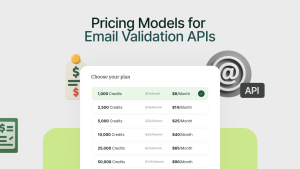
Discover how email validation API pricing works — from per-check costs to subscription models and hidden fees. Compare top providers and choose smartly.
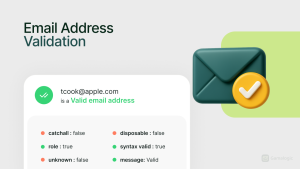
Discover What is Email Validation , why it matters, and how third-party tools help improve deliverability, sender reputation, and ROI.


 No credit card required
Post your Comment.