 Sign In













 Email Marketing
 ABM
ABM  List Building
  Lead Generation
  Growth Hacker
  Digital Marketing
  Data Enrichment
  Software as a Service
  Data as a Service
  Waterfall Enrichment
  Startup
  Revenue Performance
  Job Change Tracking
  Customer Data Platform
  CRM
CRM 


 Knowledge Base
  Video Tutorials
  Help Center
  Tarpitting Scoring
  ROI Calculator
  About us
  Contact us
  Testimonials
  Automation
Why Most Cold Email Re-engagement Campaigns Fail (and How to Avoid It)

30 Jul 2026
Mohamed Ahmed
12 Minutes
Read

 Blog
FAQ
Case Studies
Knowledge Base
Video Tutorials
Help Center
SEG Validation
Tarpitting Scoring
ROI Calculator
About us
Contact us
Testimonials
Blog
FAQ
Case Studies
Knowledge Base
Video Tutorials
Help Center
SEG Validation
Tarpitting Scoring
ROI Calculator
About us
Contact us
Testimonials
Have you ever sent a follow-up email to hundreds of prospects only to receive little—or no—response? You’re not alone. One of the biggest misconceptions in cold email marketing is that sending another email will automatically revive inactive prospects. In reality, most cold email re-engagement campaigns fail because they repeat the same mistakes as the original outreach.
The most common issue is poor data quality. Email lists naturally become outdated as people change jobs, companies switch domains, or accounts are abandoned. If you’re re-engaging contacts that are no longer valid, you’ll see higher bounce rates, lower deliverability, and fewer opportunities to connect with real prospects. Before launching any re-engagement campaign, it’s worth verifying your list with a trusted email verification tool like Gamalogic to remove invalid, disposable, and risky email addresses.
Another common mistake is sending the exact same message again. Prospects who ignored your first email are unlikely to respond to an identical follow-up. Instead, give them a reason to engage by sharing a new insight, a relevant case study, a helpful resource, or an update that addresses their business challenges. Your goal isn’t simply to remind them you exist—it’s to provide value that makes replying worthwhile.
Timing also plays a significant role. Following up too soon can come across as pushy, while waiting too long may cause prospects to forget your previous interaction altogether. A thoughtful re-engagement sequence, spaced appropriately and tailored to the recipient’s interests, is far more effective than repeatedly sending “Just checking in” emails.
Finally, don’t overlook email deliverability. Even a perfectly written re-engagement email won’t generate replies if it lands in the spam folder. Make sure your domain is properly configured with SPF, DKIM, and DMARC, monitor your sender reputation, and maintain a clean email list. If you haven’t already, check out our guides on Cold Email Deliverability: 7 Proven Strategies to Reach the Inbox and The Complete Guide to Email Verification to strengthen your outreach before relaunching your campaign.
Successful cold email re-engagement isn’t about sending more emails—it’s about sending smarter ones. With verified data, personalized messaging, and solid deliverability practices, you can turn silent prospects into meaningful conversations and improve the overall performance of your cold email campaigns.
Cold email re-engagement is the process of reaching out again to prospects who previously received your cold emails but never replied or engaged.
Unlike traditional follow-ups, re-engagement campaigns focus on providing renewed value rather than simply asking, “Did you see my last email?”
An effective re-engagement email may:
The objective is to restart the conversation naturally.
Before creating a re-engagement campaign, it’s important to understand why prospects become inactive.
Common reasons include:
Sometimes the issue isn’t your offer—it’s your data quality.
As discussed in Gamalogic’s article “Why Your Cold Emails Get Deleted Instantly (And How Email Verification Changes Everything),” poor-quality email data can significantly reduce engagement even when your messaging is strong.
Timing matters.
A good practice is to re-engage prospects after your initial sequence has ended and enough time has passed for them to revisit your message.
Consider re-engagement when:
Avoid sending repeated “Just checking in” emails with no additional context.
There’s little value in emailing addresses that are no longer valid.
Email databases naturally decay over time as people change jobs, abandon accounts, or organizations update their contact information.
Before launching a re-engagement campaign, validate your list using Gamalogic.
Gamalogic helps identify:
This improves deliverability while protecting your sender reputation.
Suggested Internal Link:
The Complete Guide to Email Verification & Email Quality in 2026
If your previous subject line didn’t encourage opens, don’t reuse it.
Instead, create something that sparks curiosity while remaining professional.
Examples:
Avoid misleading clickbait or excessive punctuation.
Don’t resend the same email.
Instead, provide something useful such as:
Give prospects a reason to engage now, even if they ignored your earlier emails.
Re-engagement emails should be concise.
Busy professionals are more likely to read and reply to emails that get to the point quickly.
Aim for:
Generic follow-ups rarely succeed.
Reference:
Even small personalization improvements can significantly increase response rates.
For more ideas, refer to:
How to Use AI Personalized Cold Emails to Engage High Value Prospects.
Even the best re-engagement email won’t work if it never reaches the inbox.
Review your:
Also ensure you’re using verified email addresses before every campaign.
Avoid these common errors:
Many of these issues can quietly reduce inbox placement and campaign performance over time.
Successful re-engagement begins with accurate prospect data.
Gamalogic helps businesses improve campaign performance by ensuring every email is sent to a verified, deliverable address.
With Gamalogic, you can:
By combining clean email data with personalized messaging, businesses can revive inactive prospects while maximizing the return on every outreach campaign.


Find out how often to clean your email list by size and type, plus the trigger events that mean it's time to clean now, not later.
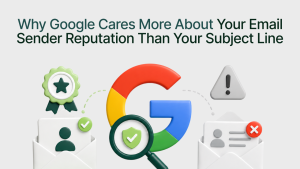
Improving your sender reputation should be one of the first priorities for every email marketer, sales team, and business running cold outreach campaigns. Here, what email sender reputation is, why Google values it so highly, and how simple practices like email verification and list hygiene.
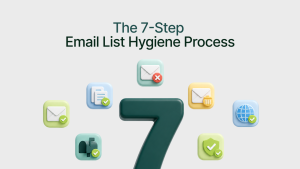
Discover the 7-step email list hygiene process used by top-performing teams to reduce bounces, improve inbox placement, and maintain strong sender reputation through proper email verification and data management.


 No credit card required
Post your Comment.