 Sign In













 Email Marketing
 ABM
ABM  List Building
  Lead Generation
  Growth Hacker
  Digital Marketing
  Data Enrichment
  Software as a Service
  Data as a Service
  Waterfall Enrichment
  Startup
  Revenue Performance
  Job Change Tracking
  Customer Data Platform
  CRM
CRM 


 Knowledge Base
  Video Tutorials
  Help Center
  Tarpitting Scoring
  ROI Calculator
  About us
  Contact us
  Testimonials
  Automation
Email Validation Customer Retention: Improve Ecommerce CLV with Clean Email Lists

22 May 2026
Sreerag
12 Minutes
Read

 Blog
FAQ
Case Studies
Knowledge Base
Video Tutorials
Help Center
SEG Validation
Tarpitting Scoring
ROI Calculator
About us
Contact us
Testimonials
Blog
FAQ
Case Studies
Knowledge Base
Video Tutorials
Help Center
SEG Validation
Tarpitting Scoring
ROI Calculator
About us
Contact us
Testimonials
Customer retention is one of the biggest revenue drivers in ecommerce. Acquiring new customers is expensive, but retaining existing customers increases profitability, improves repeat purchase rates, and strengthens long-term brand loyalty.
However, many ecommerce brands overlook one critical issue hurting retention silently:
Poor email data quality.
Invalid email addresses, fake signups, inactive subscribers, and outdated customer records reduce deliverability, weaken engagement, and break lifecycle marketing automation.
This is where email validation customer retention strategies become essential for sustainable ecommerce growth.
In this guide, you’ll learn:
Most ecommerce brands focus heavily on acquisition campaigns while ignoring email list quality.
But dirty email lists create hidden retention problems:
This directly impacts:
A clean email database is not just a marketing asset it is the foundation of ecommerce customer retention.
Many ecommerce stores using platforms like Shopify and WooCommerce experience silent revenue loss because of email list decay.
Over time:
This creates a dangerous chain reaction:
Dirty email list → higher bounce rate → weaker sender reputation → poor inbox placement → lower engagement → reduced repeat purchases → lower CLV
Even the best ecommerce retention marketing campaigns fail if emails never reach real customers.
Lifecycle marketing automation depends on reliable customer data.
When email validation is implemented at signup and throughout the customer journey:
This improves overall lifecycle email optimization and strengthens customer loyalty workflows.
Many brands combine platforms like Klaviyo, HubSpot, and Mailchimp with real-time email validation to maintain high-quality first-party customer data.
Clean data improves:
Because messages are delivered to real users instead of invalid inboxes.
This directly supports improving email engagement for ecommerce and helps brands build stronger customer relationships over time.
Poor email data often damages ecommerce email deliverability strategies, especially during high-volume campaigns.
Retention depends heavily on repeat customer engagement.
If users miss:
they are less likely to return.
Validated email data ensures ecommerce brands can maintain consistent communication throughout the customer lifecycle.
This is especially important for subscription products, replenishment-based stores, and long-term customer loyalty programs.
Segmentation becomes unreliable when fake or inactive emails pollute customer databases.
Email validation helps ecommerce brands:
This creates more accurate customer engagement signals and improves campaign personalization.
Email lists naturally decay over time.
Without ongoing validation:
Using clean email lists ecommerce strategies helps brands reduce subscriber churn prevention issues and maintain stronger sender reputation.
Many ecommerce stores struggle with inactive customer reactivation because emails never reach intended recipients.
A validated email database improves:
This increases long-term retention and customer lifetime value.
An ecommerce fashion brand running campaigns through Klaviyo discovered that nearly 18% of their email database contained invalid or inactive addresses.
Problems included:
After implementing real-time email validation at signup and cleaning their existing list:
The company also improved segmentation accuracy, allowing more personalized lifecycle marketing automation.
Email validation is not only about deliverability.
It also improves:
When fake or invalid users distort analytics, brands make poor marketing decisions based on inaccurate engagement signals.
This is why email validation for ecommerce growth has become a critical part of modern retention strategy.
Retention also depends on reliable transactional communication.
If customers fail to receive:
trust declines quickly.
This is why transactional email deliverability plays a major role in long-term customer experience and retention.
Reliable email validation helps ensure critical transactional workflows remain effective.
Cart abandonment recovery campaigns rely entirely on accurate email addresses.
Invalid emails reduce:
Strong cart recovery email performance starts with validated customer data collected at signup and checkout.
Prevent invalid or fake addresses before they enter your database.
Remove inactive, bounced, and risky addresses continuously.
Track:
Use validated customer data to improve lifecycle targeting and personalization.
Maintain strong sender reputation using consistent email hygiene best practices.
When selecting an ecommerce email validation platform, look for:
High Accuracte email validation api like Gamalogic offers 98% accuracy, help ecommerce businesses improve customer retention by maintaining clean customer databases and improving lifecycle communication performance.
Retention is driven by communication.
If customers never receive your emails, your retention strategy fails before engagement even begins.
Clean email data improves:
For ecommerce brands focused on sustainable growth, email validation is no longer optional it is part of the customer retention infrastructure.
Improve your ecommerce customer retention strategy with clean, validated email data.
Use email validation to:
👉 Try Gamalogic email validation API to improve ecommerce engagement, protect deliverability, and build long-term customer loyalty.


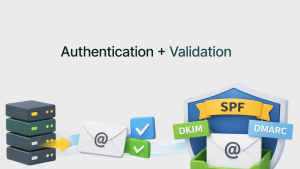
Learn how SPF, DKIM, DMARC, and email validation reduce bounce rate, protect sender reputation, and boost inbox placement in 2026. Essential guide for marketers.
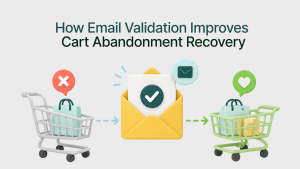
Learn how cart recovery email validation improves abandoned cart recovery, ecommerce email deliverability, bounce reduction, and customer retention. Discover how clean email lists help ecommerce brands recover more lost sales and optimize recovery campaigns.
Discover how to measure and improve email validation accuracy. This guide compares benchmarks, metrics, and top providers — helping marketers achieve <2% bounce rates and stronger deliverability.


 No credit card required
Post your Comment.